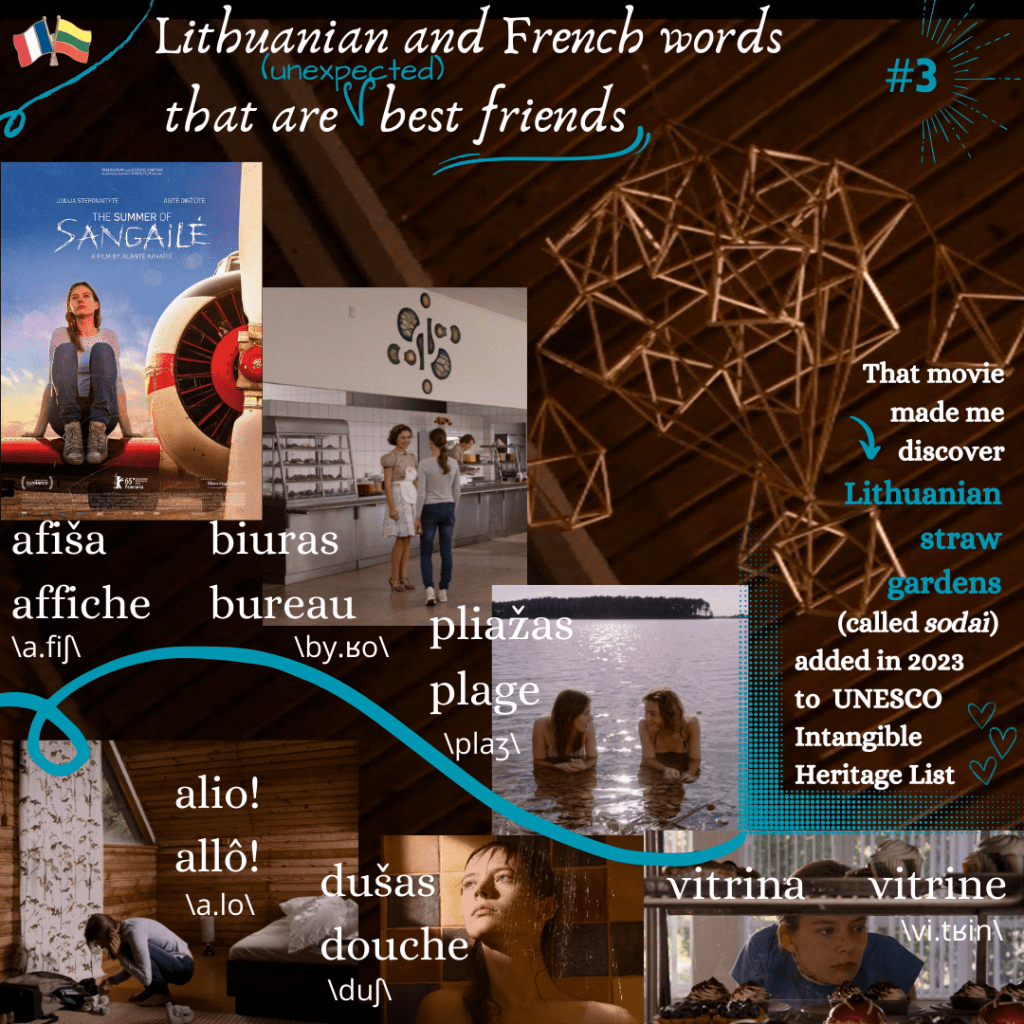
When it was released on DVD in 2016, I discovered the Lithuanian film The Summer of Sangailė (original title: Sangailės vasara) by Alantė Kavaitė. The movie was a revelation to me. At first, I was drawn to the love story between two girls. I never imagined that a love affair would blossom between Lithuania and me after seeing this film. I loved it so much that I decided to learn the Lithuanian language! It was a way for me to extend the magic of the film for years.
I also wrote to Aistė Diržiūtė-Rimkė, one of the two main actresses in the film. We then exchanged some long and lovely messages over the years. One day, when I told her about my plans to travel to the Baltic countries, I was just hoping she would wish me a safe journey. I was far from the mark! She made a very touching and unexpected suggestion: to meet each other! Whether I met her or not, such a sign of consideration meant the world to me.
A few months later, I was incredibly lucky that the dates of my trip were compatible with her hectic schedule. I met Aistė face to face on a summer evening that I will remember for the rest of my life. Aistė is one of the most endearing, generous, sensitive and humble people I have ever met.
To this day, I can still say that I have never felt as welcome in Lithuania as I have in any other country in the world.
Actress and journalist Aistė Diržiūtė-Rimkė and me in 2022 in Vilnius
23 August 1989 marked the 50th anniversary of the signing of the German-Soviet Molotov-Ribbentrop Pact, which was intended as a treaty of non-aggression. This pact was actually accompanied by ‘secret protocols’, ‘which paved the way for the Baltic states to be annexed by the USSR, by placing them in the Soviet “zone of interest”’ and ‘allowed Stalin to invade Latvia, Lithuania and Estonia in September 1939, just a few weeks after Hitler’s troops had entered Poland’, as stated in two articles in Le Monde on 25 August 1989.
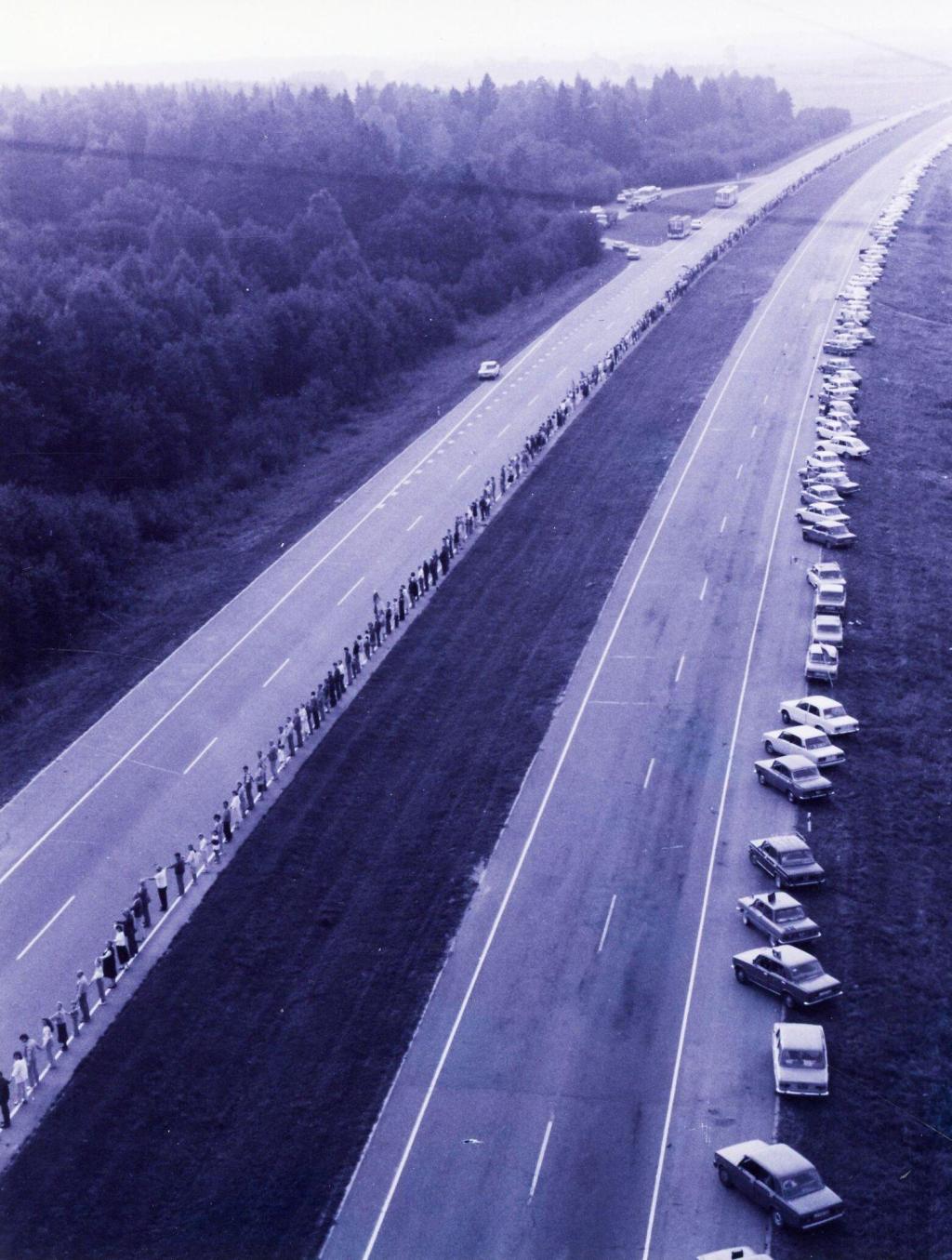
On 23 August 1989, 2 million Lithuanians, Latvians and Estonians had the courage to form a giant human chain of peaceful protest stretching 600 km from Vilnius to Tallinn. This human chain was called the Baltic Way.
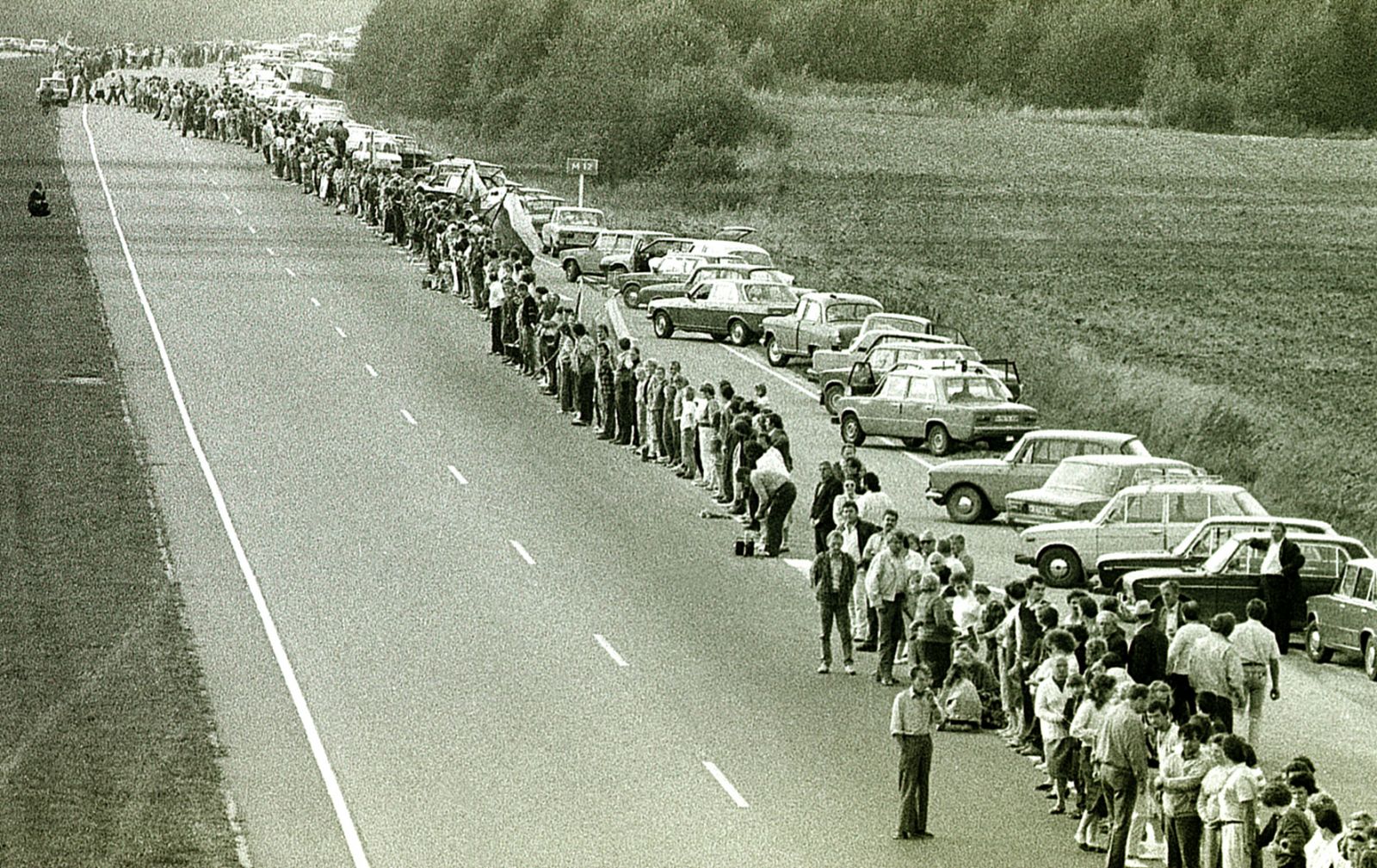
The Baltic Way on 23 August 1989 Source: ELTA (Lithuanian and international news agency)
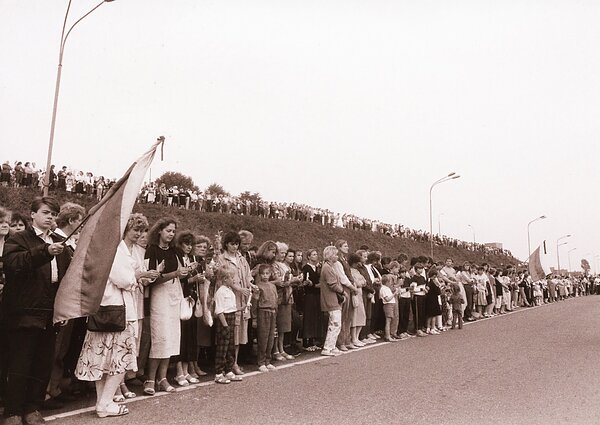
Photo credit: Vytautas the Great War Museum (Lithuania)
On 25 August 1989, the newspaper Le Monde reported:
‘A moment of silence was observed in Tallinn, as the bells fell silent, while the tricolored blue, black and white flags – the colors of Estonia, which became official again this year – flapped in the wind. Then the crowd began to sing the national anthem, chanting “Freedom, freedom, freedom!”. Many banners were held up denouncing the 1939 pact, but also attacking the “Soviet occupation”. The banners read: ‘Russians, go home!’ and “Estonia will never belong to the Soviet Union!”.’ […] ‘In the very Catholic city of Riga, bells rang throughout the day, every quarter of an hour. The red, white and red colors were everywhere.’
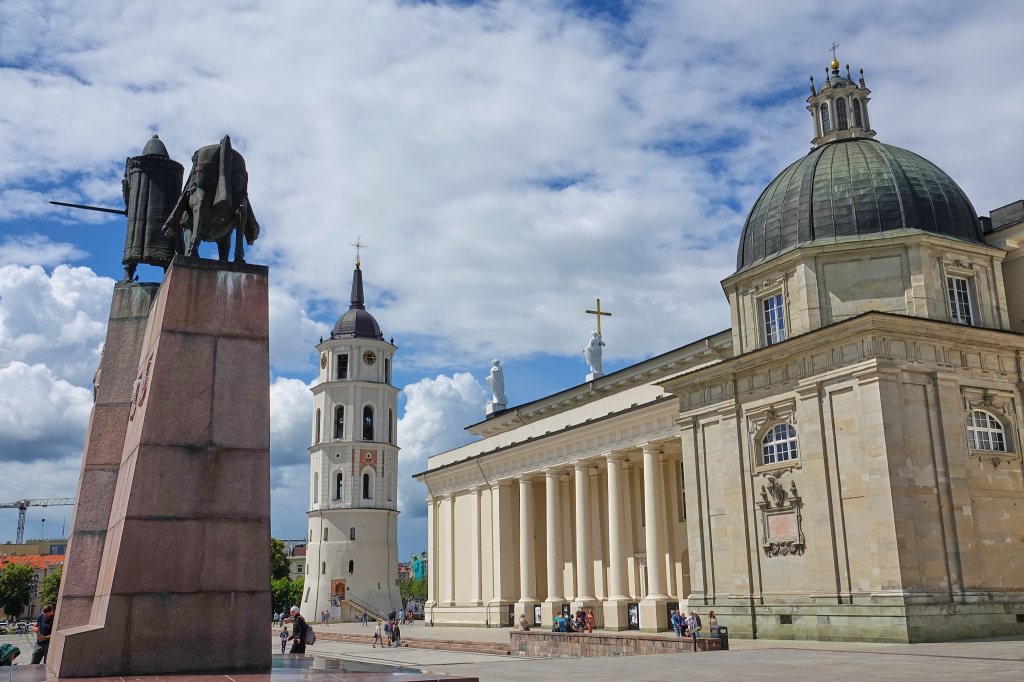
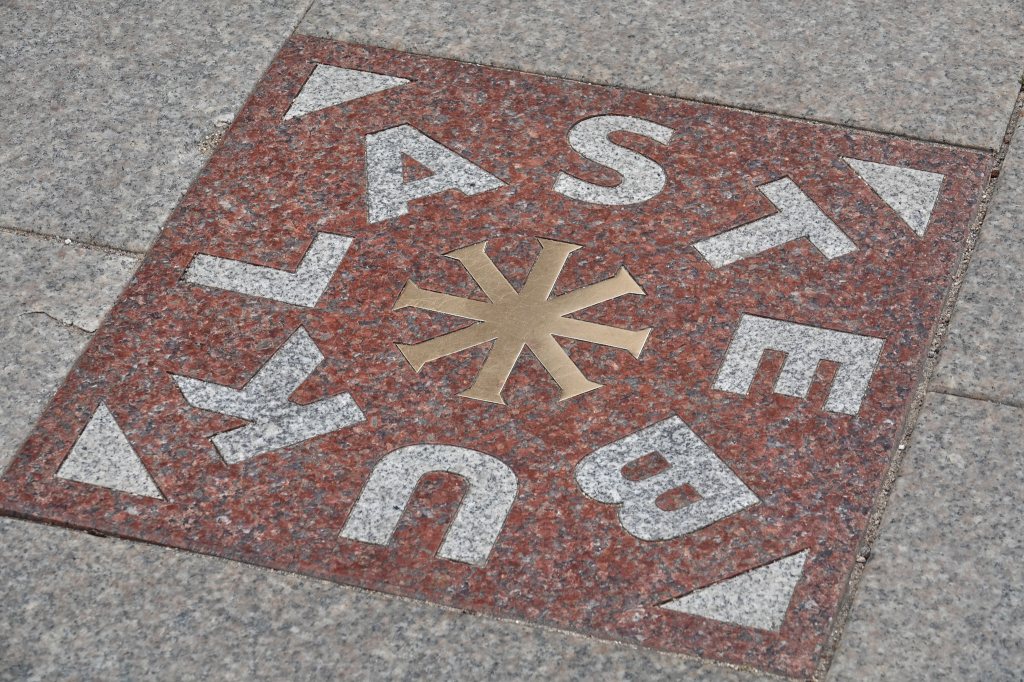
In Vilnius, Cathedral Square (Katedros Aikštė in Lithuanian) is considered to be the centre of Lithuania. The human chain began at the very spot where the word STEBUKLAS (miracle in Lithuanian) can be seen on the ground. Photo credit: the blog’s author
Silence and resilience of the Balts during the Soviet occupation
From 1939 until 1991, Lithuania, Latvia and Estonia were occupied and annexed by imperialist Russia. Throughout this period, the Balts suffered tremendously by being deprived of everything: they sometimes had to queue for hours to get basic foodstuffs, they were forbidden to go to church or an ulcer was treated with aspirin (as documented by Jean Bigot in his book La Lituanie au quotidien : Portraits d’une renaissance) – to name but a few examples.
The only thing they were entitled to was probably silence. Muzzled by the Russian authorities, the Balts have retained a rather silent temperament.
In 2019, on the occasion of the 30th anniversary of the Baltic Way, Enrico Letta, then Dean of Sciences Po Paris and former Italian Prime Minister, stressed that the Baltic Way was ‘a unique example of civic activism that has surprised the whole world with its scale and authentic mobilisation of civil society’.
After the return to freedom, the psychological aftereffects of the Soviet era
A few months after the human chain, on 11 March 1990, Lithuania succeeded in re-establishing its independence, followed by Estonia on 20 August 1991 and Latvia on 21 August 1991.
During the Soviet era, the Balts were always afraid of losing their identity and their native languages. Despite regaining their independence and freedom, the moral damage of the Soviet occupation has never disappeared: fear is still deeply rooted in the minds of the Balts, as Zita, a Lithuanian guide in her seventies, told me.
Of the 5 universal primary emotions, fear is the most difficult to control, which may make it the hardest legacy to bear for these peoples.
Ukraine on the threshold of Europe
By learning the Lithuanian language, I also discovered the history of an extremely endearing people, that have shown unimaginable courage even in their very contemporary history.
I wasn’t yet born when the human chain was formed, but when I discovered, in an article in Le Monde published on 25 August 1989, an extract from the joint public declaration made by the Baltic States to the rest of the world on 23 August 1989 – “Today, fifty years later, we call on all our friends in the North, South, East and West: the Baltic states stand on Europe’s threshold” -, I know that Ukraine is also on the threshold of Europe today, and that truth, democracy and freedom will always have the last word.
Source of the headline photo: Vytautas the Great War Museum (Lithuania)
How is Lithuanian one of the oldest living languages in the world
Lithuania is a country of lakes nestled between hills and plains, a geography that has helped preserve the ancient roots of its national language. For linguists, Lithuanian is of exceptional interest because it is considered to be the living language closest to Proto-Indo-European, a hypothetical language believed to be the only ancestor of today’s Indo-European languages.
The Lithuanian language, like the people who speak it, is neither Slavic nor Germanic: along with Latvian (and Old Prussian, now a dead language), it belongs to a specific branch of the Indo-European family: the Baltic. Lithuanian is thought to have preserved the greatest number of grammatical structures and words from Proto-Indo-European. Rivers, lakes and forests isolated the ancestors of Lithuanians, the proto-Baltic tribes who lived in 3000 BC: this isolation helped preserve the archaic character of the Lithuanian language.
While French and English grammar has simplified considerably over time, the grammar of Germanic languages has simplified less, and Lithuanian grammar even less. Lithuanian has retained some very ancient features. It has a rich system of declensions, including a rare, if not unique, grammatical form: the pronominal form of the adjective. Putting an adjective in the pronominal form allows it to be given greater prominence in the sentence, to emphasise the quality it expresses or the characteristic of the noun it complements.
This may give the impression that Lithuanian is nothing like French. And yet, Lithuanian cannot be said to be completely different from French.
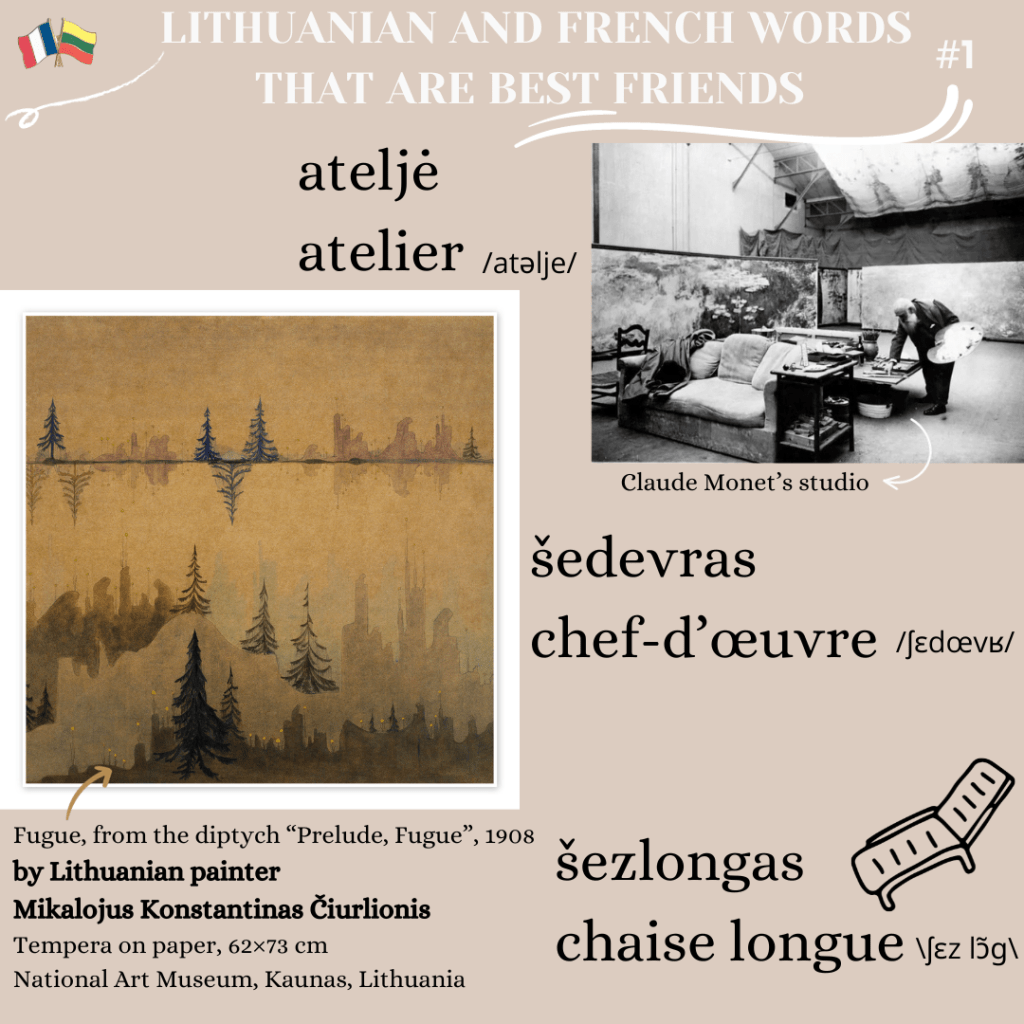
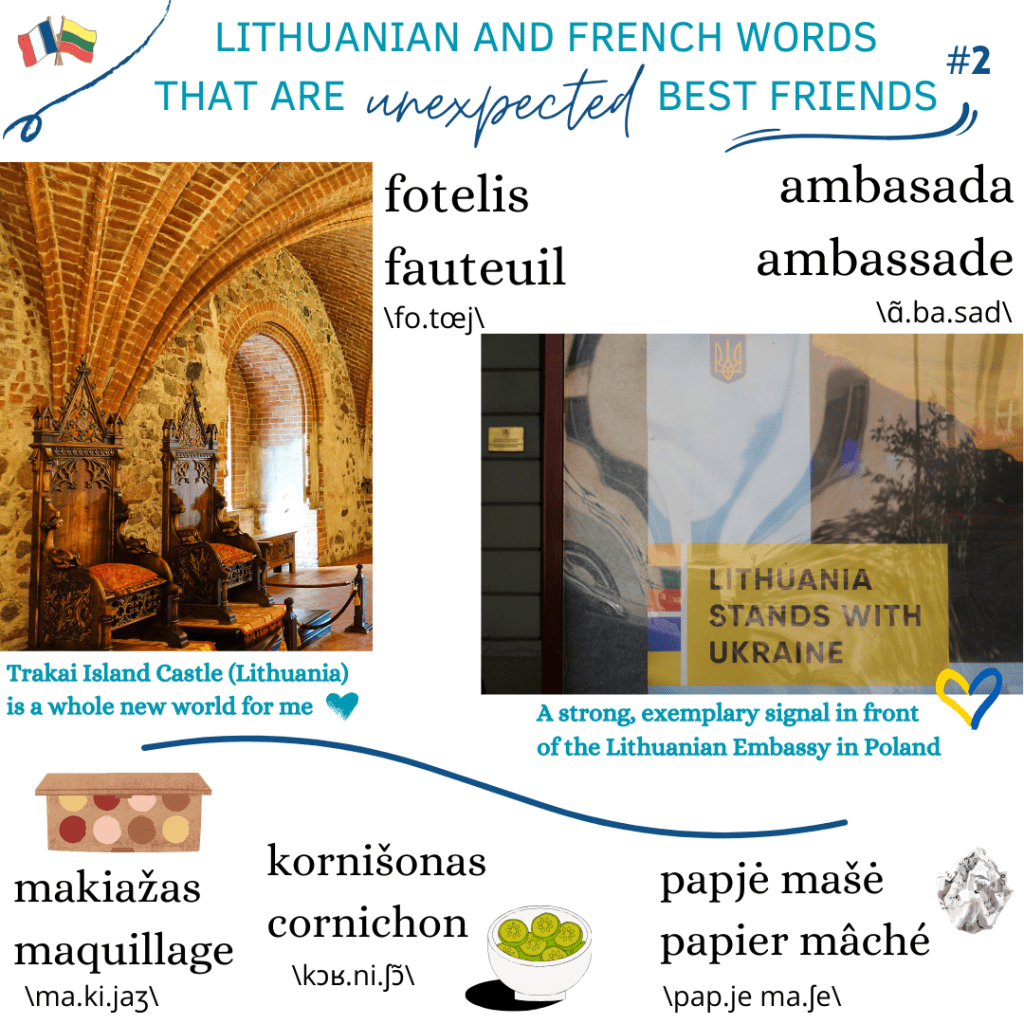
Lithuanian and French words: linguistic surprises to discover
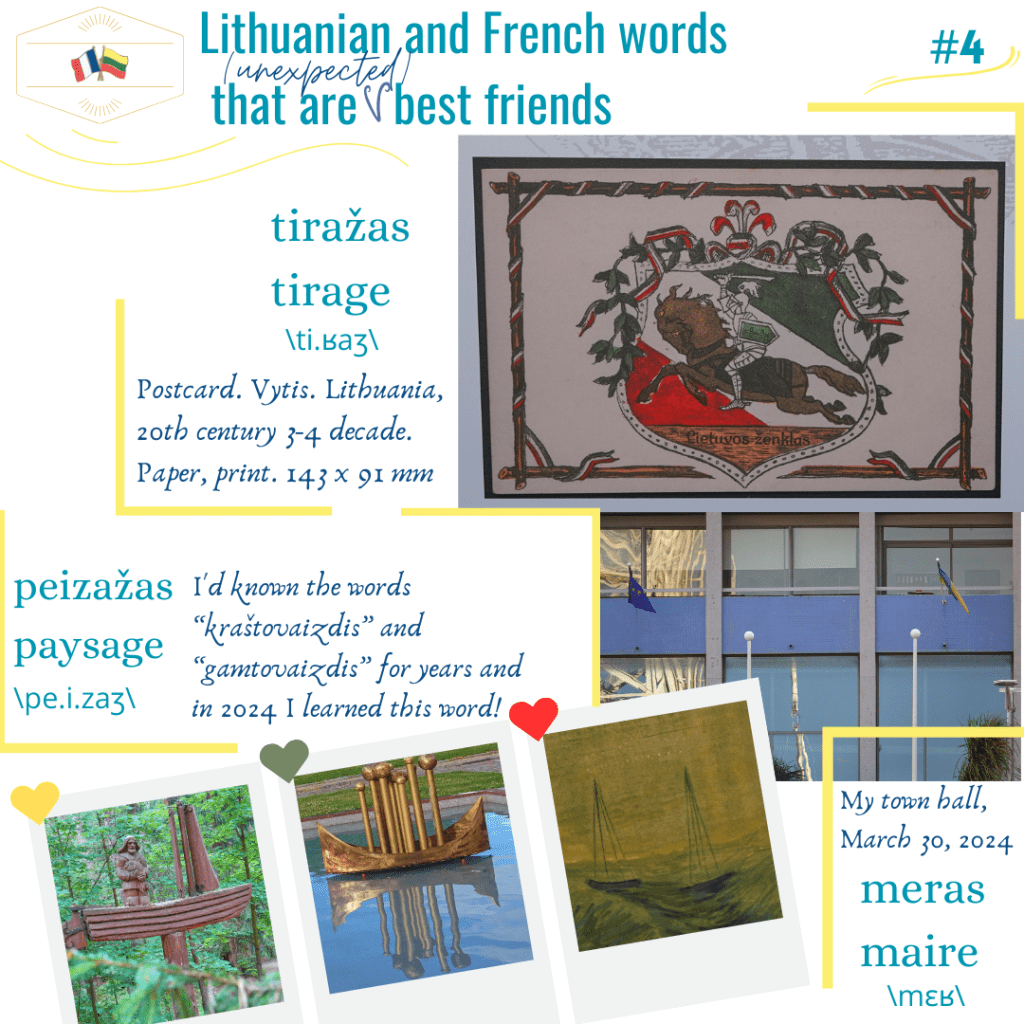
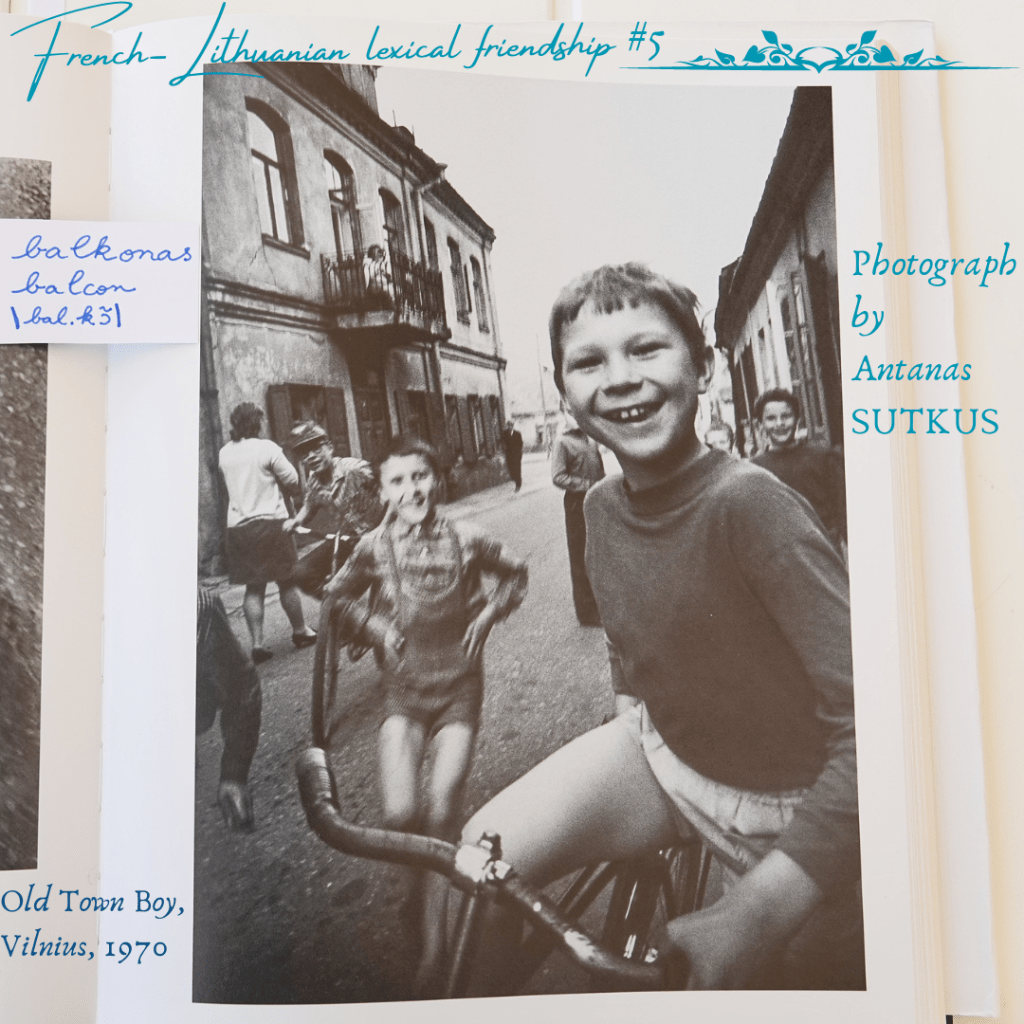
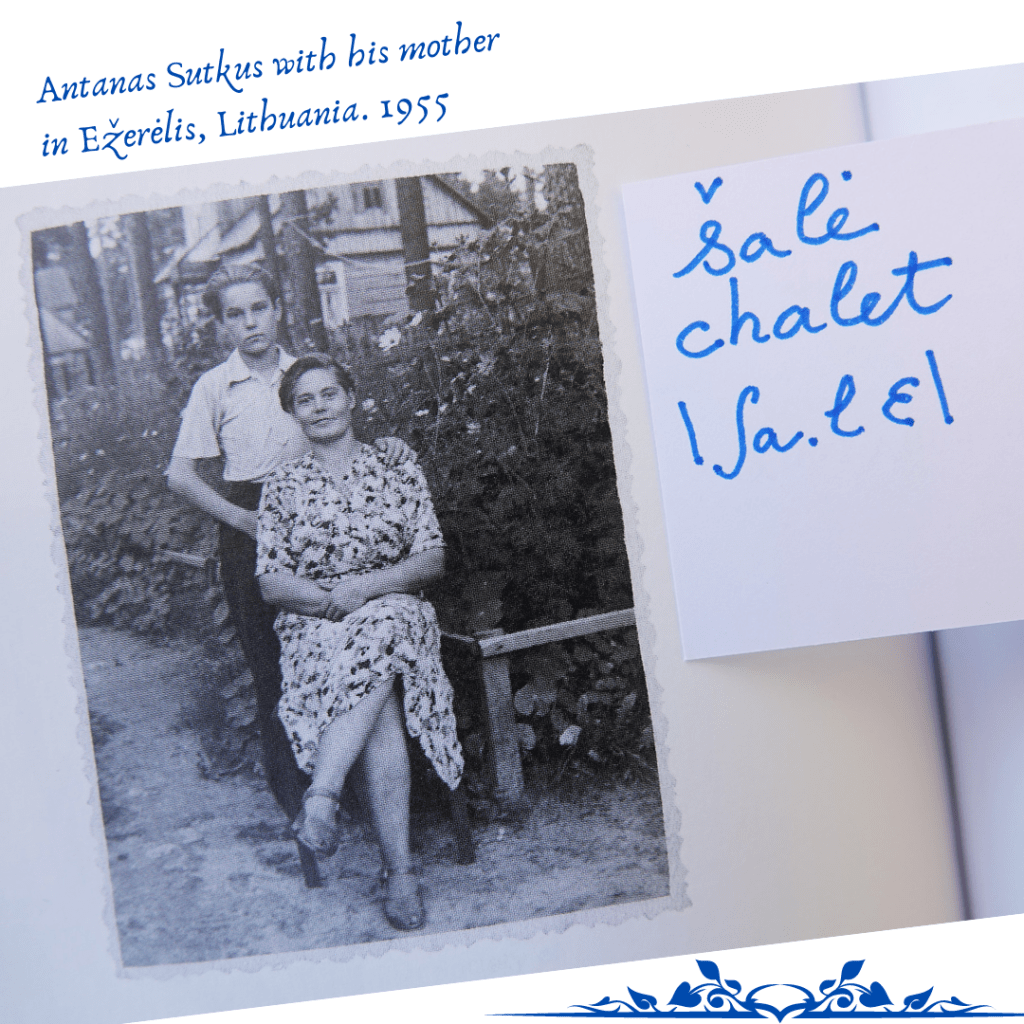
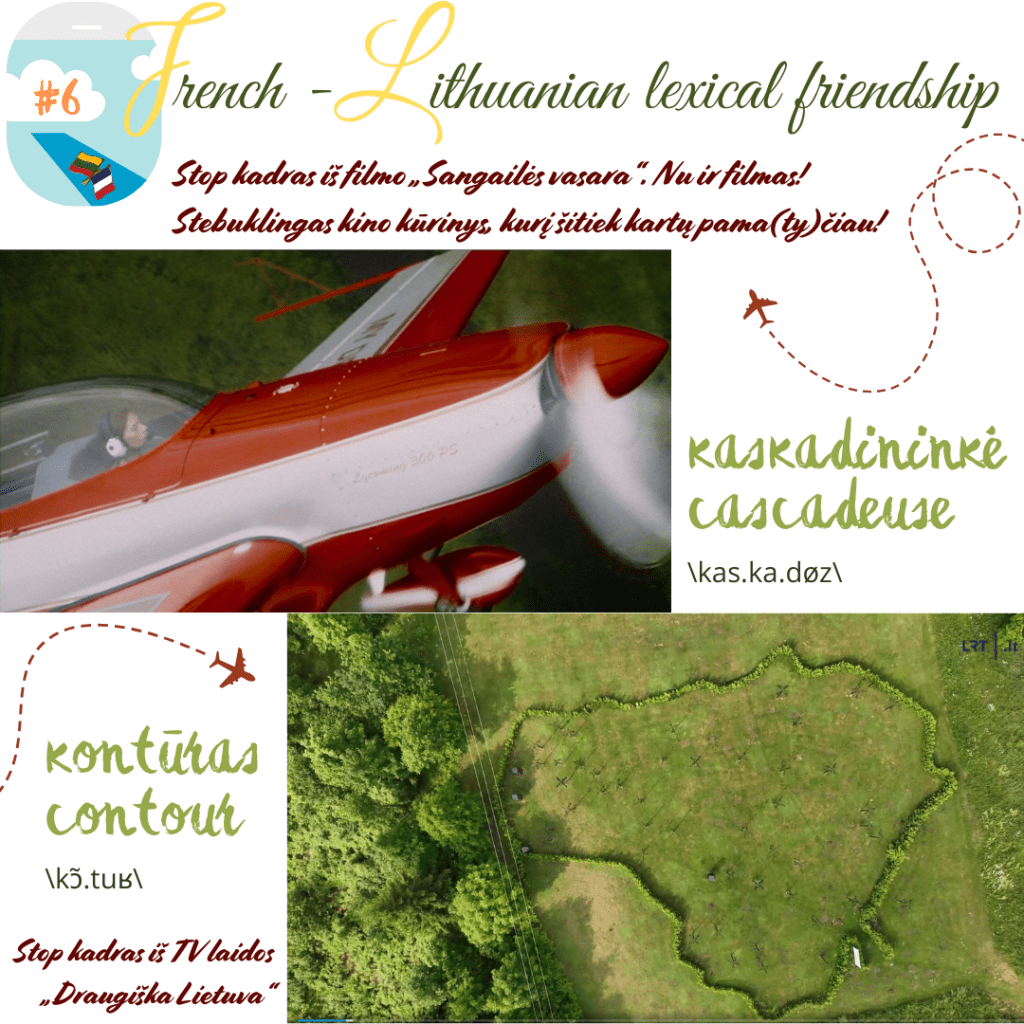
Below, I invite you to discover Lithuanian words* from a wide variety of fields that have unexpected similarities with their French equivalents.
If you compare these same words with their English, Spanish, Italian or German equivalents, you will find that for almost all of them, only the Lithuanian word looks like the French word! For example, the French word affiche is afiša in Lithuanian, but poster in English and in German, cartel in Spanish and locandina in Italian! Amazing, isn’t it?
The word afiša is borrowed from French, as are the Lithuanian equivalents of a few other French words on this list: chef-d’œuvre, contour, chalet, papier mâché, etc.
*Pronunciation guide: The Lithuanian letter š is pronounced like in the English word ship; ž is pronounced like in the English word leisure; j is pronounced like in the English word yellow.
As the list of words provided is based on my personal reading, I will be delighted to add to it as I find out surprising similarities between Lithuanian and French.
All the graphics above were created by the blog’s author.
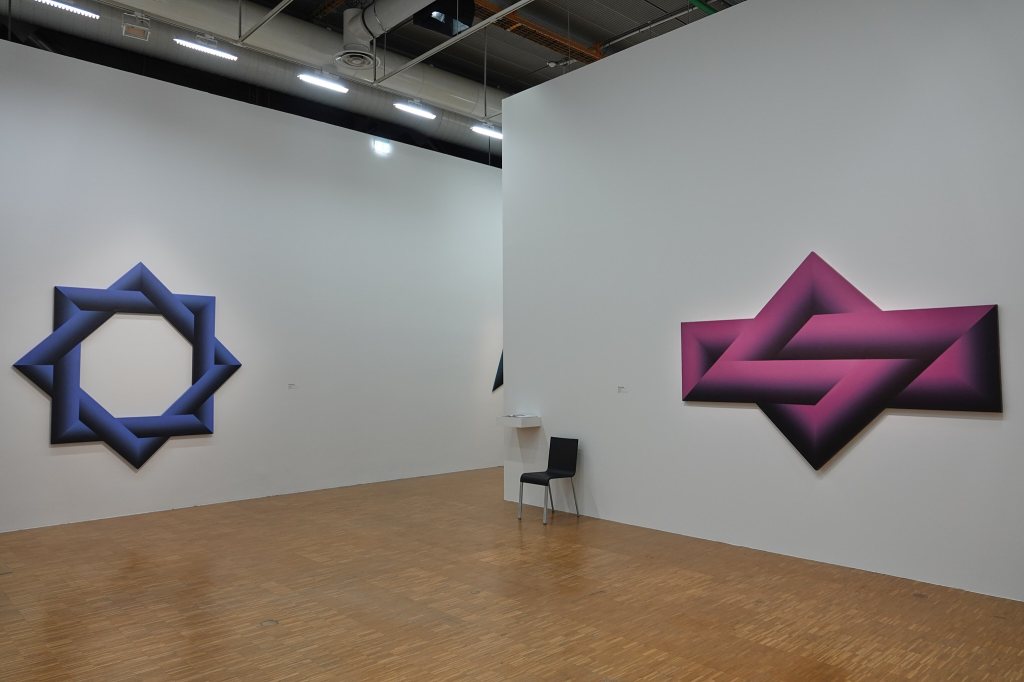
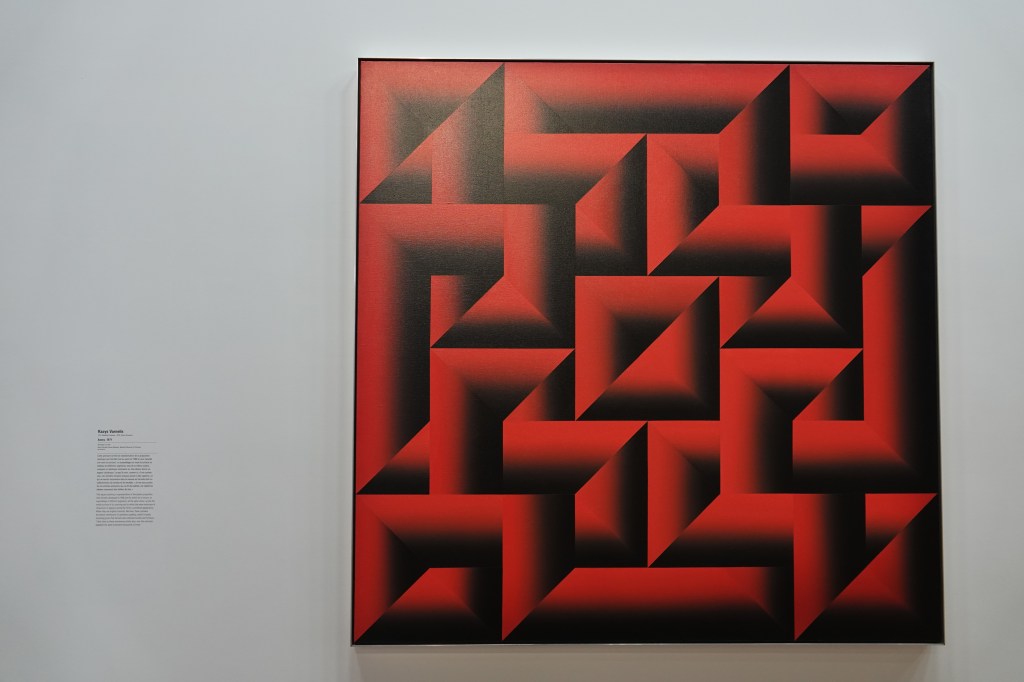
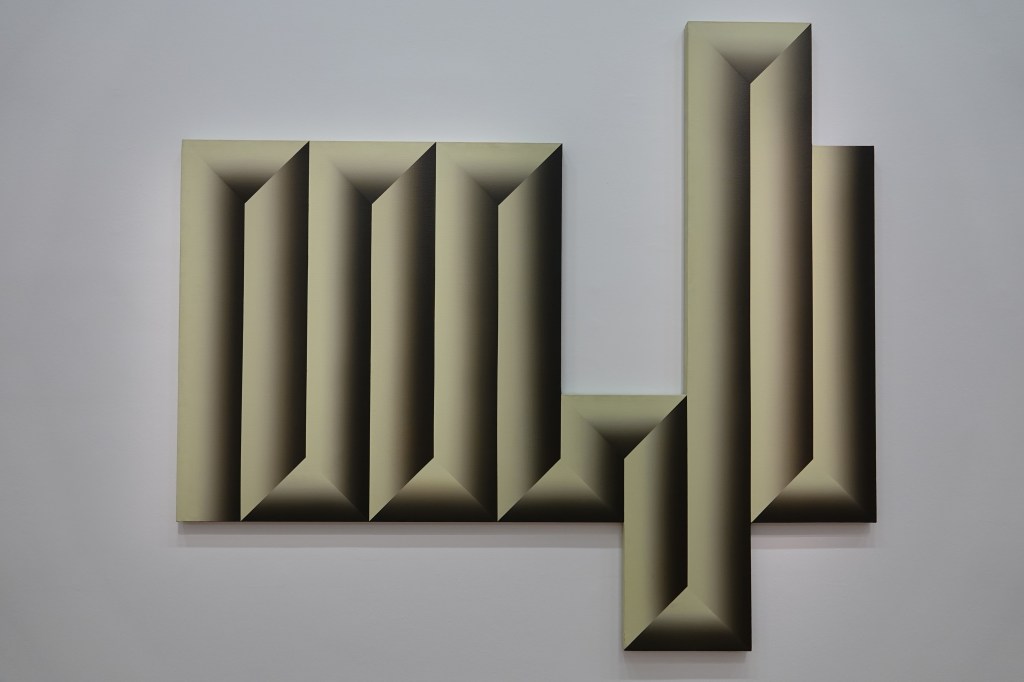
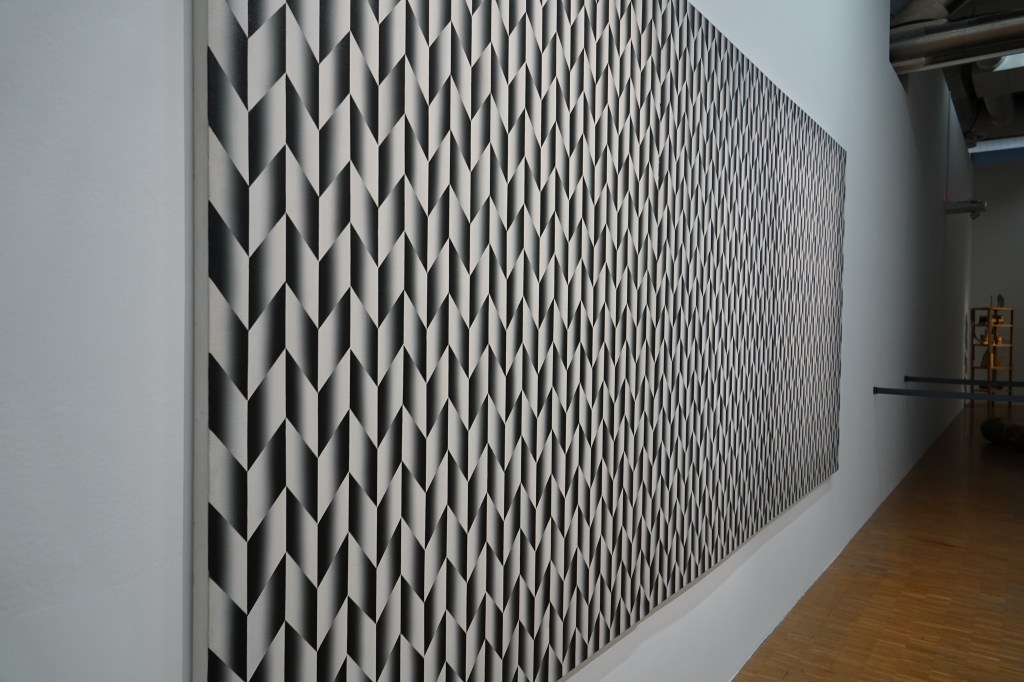
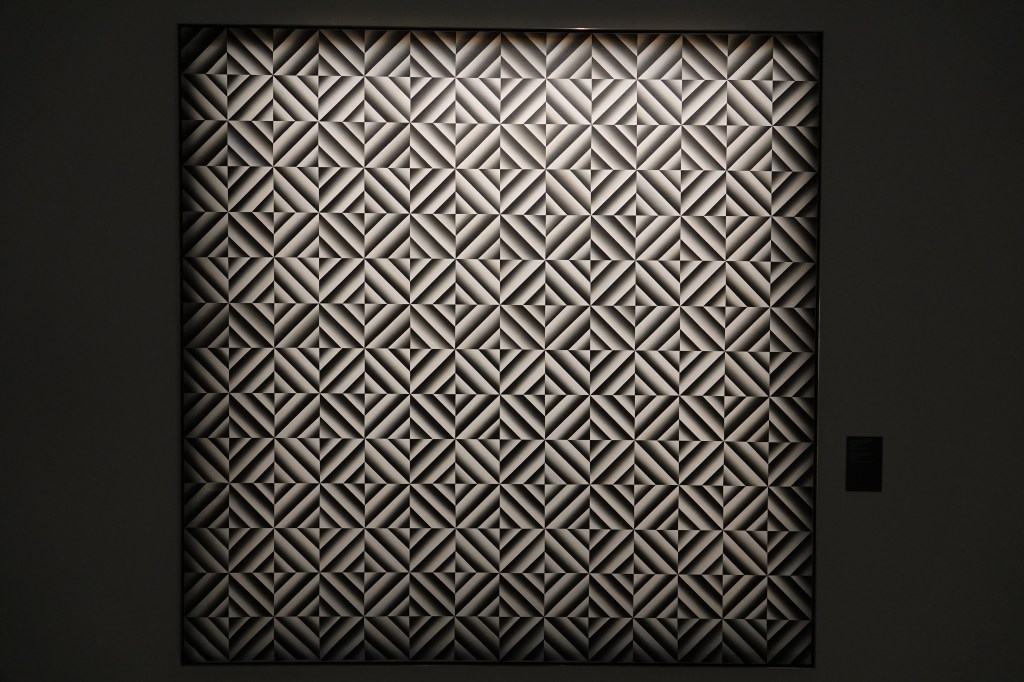
While M. K. Čiurlionis (1875-1911) is Lithuania’s most iconic painter, Kazys Varnelis (1917-2010) is no less a world-renowned Lithuanian painter.
Recognised as a master of Op Art (optical art based on and creating optical illusions), Kazys Varnelis has something in common with Čiurlionis, considered the founder of modern Lithuanian art: they both found inspiration in their country’s folklore.
Kazys Varnelis. Azora, 1971 Acrylic on canvas, 173 x 173 cm National Museum of Lithuania
Kazys Varnelis. Vibrato, 1972 Acrylic on canvas, 204 x 224 cm National Museum of Lithuania
Kazys Varnelis. Cascada Cristalina, 1969 Acrylic on canvas, 200 x 426 cm National Museum of Lithuania
The influence of Lithuanian folk art on Kazys Varnelis
As part of Lithuanian Season in France in 2024, the Vasarely Foundation in Aix-en-Provence hosted the exhibition Ethnographic Op Art, revealing the deep influence of Lithuanian folk art on the work of Kazys Varnelis.
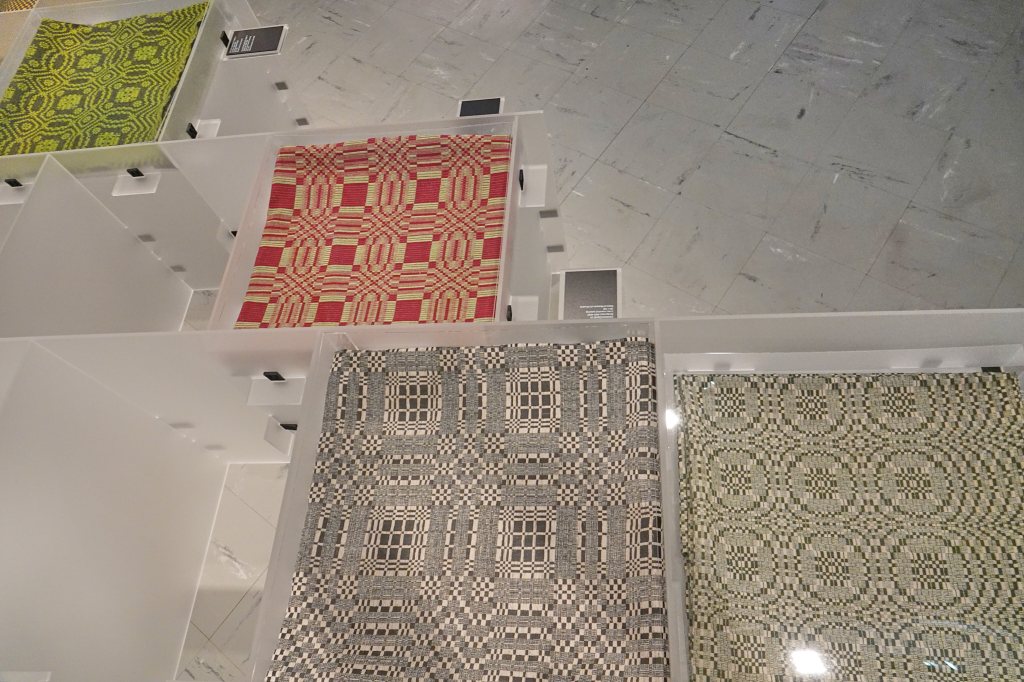
This influence came through the painter’s mother: a weaver and seamstress, she taught her son the science of geometric patterns that adorn bedspreads and other traditional Lithuanian textiles.
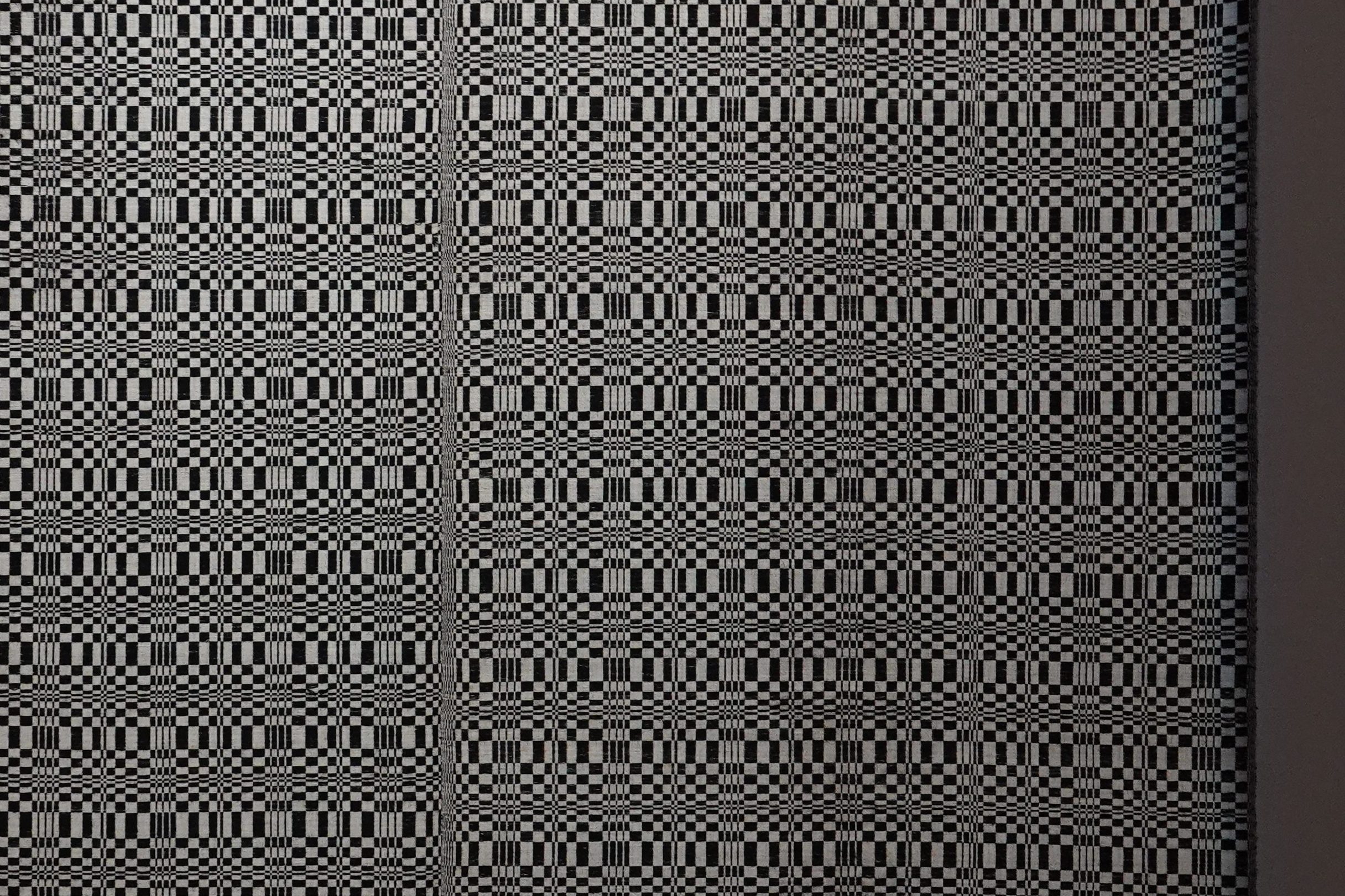
Fabrics made in the 20th century by unknown Lithuanian weavers such as Bronislava Kulšienė and Cikanavičienė.
Magdelena Bagdonaitė Bedspread, ~ 1913 Cotton, linen, wool, overshot weaving 188 x 154 cm National Museum of Lithuania
Kazys Varnelis. Pulsating Elements, 1967 Acrylic on canvas, 173 x 173 cm National Museum of Lithuania
As a child, Kazys Varnelis already assisted his father, who painted churches, but it was his mother’s influence that was decisive in enriching the global Op Art movement of the 20th century with Kazys Varnelis’ Lithuanian roots.
As an adult, Kazys Varnelis invited another form of art into his studio: he enjoyed painting while listening to classical music (Beethoven, Giuseppe Verdi) and jazz (Frank Sinatra). His habit of painting while listening to the world’s most famous crooner suggests that he remained in the mindset of appreciating popular culture for its true value, regardless of its origin, without ever despising the influence it could have on his work.
Main photo of the article: Preview of the exhibition Kazys Varnelis, The Op Classicist from Lithuania, presented by the Centre Pompidou, Paris, as part of the Season of Lithuania in France in 2024.
Left painting: Kazys Varnelis Lotos, 1976 Acrylic on canvas, 221 x 222 cm National Museum of Lithuania
Right painting: Kazys Varnelis Idiom, 1975 Acrylic on canvas, 174 x 248 cm National Museum of Lithuania
After heavy swells, if do it yourself enthusiasts in France enjoy finding driftwood on the beach, Lithuanians can easily find amber!
Amber is Lithuania’s gold. Baltic amber is a fossil resin, produced 40 million years ago by pine trees that were swallowed up by the Baltic Sea.
The gold of the Baltic coveted by the Egypt of the pharaohs…
The Silk Road is well known, but the Amber Road deserves to be better known. Amber was at the root of the first contacts between the peoples of the Baltic and the Mediterranean. Amber led the inhabitants of the Mediterranean and the Black Sea, as well as the Arabs of the Near East, to organise the first trade routes to Northern Europe. In the French book Lituanie : Les feux de pierre, author Julien Oeuillet recalls that Baltic amber was even found on Tutankhamun’s mask!
…before inspiring the name of the greatest invention of the 19th century
The Lithuanian language associates amber with its protective properties. Amber is called gintaras (the verb ginti means to defend, to protect). The term gintaras refers to an amulet or good luck charm.
Romance languages as well as English associate amber with its potential uses. The term in these languages for amber was borrowed as early as the 14th century from the medieval Latin ambar, ambra, itself derived from the Arabic anbar, ‘ambergris’. Amber, of plant origin, was given this name by analogy with ambergris, of animal origin, which has similar physical characteristics and uses. Ambergris was imported into Europe in the Middle Ages for use as perfume and medicine.
When you touch it, amber captures body heat and releases it. In scientific jargon, amber is a combustible material and can cause electrification by friction (amber can generate static electricity when rubbed). According to a poetic Baltic legend, a piece of amber is a ray of sunlight that materialises when it comes into contact with water. Germanic languages associate amber with this notion of warmth and sunshine. The term Bernstein refers to amber’s ability to burn: it literally means ‘burning stone’ (from stein ‘stone’ and brennen ‘to burn’). And don’t the golden shades of amber remind you of fire?
The electrostatic properties of amber are recognised, so much so that the word electricity comes from the Greek elektron (ήλεκτρο) meaning amber!
…and making scientific discoveries possible even today
Imagine the scientific significance of this phenomenon: as it solidified, pine resin was able to trap intact, three-dimensional fragments of prehistoric living organisms! Animal and plant species: insects, spiders, fungi, lichens, bryophytes (a category of plants to which mosses belong), seed-bearing plants such as leaves, flowers, catkins and pollen, and so on.
The fossil floral archives in amber stand out for their rarity. Floral inclusions are generally no larger than 10 mm. One piece of amber, however, yielded a flower of exceptional size: 28 mm in diameter. The largest known fossil of a flower preserved in amber was found in the Baltic.
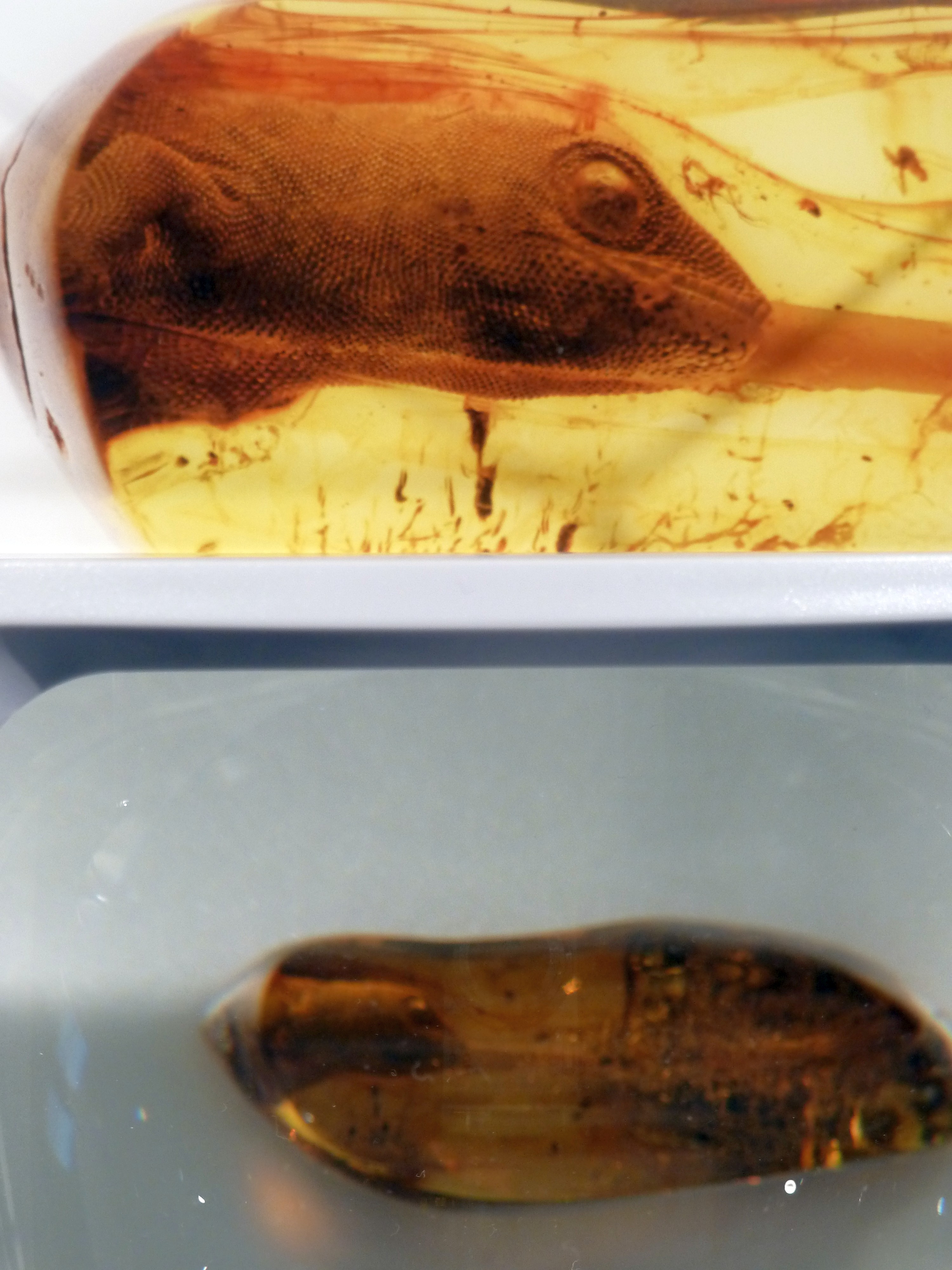
As for fossil arthropods, National Geographic estimates that Baltic amber has already yielded traces of more than 3,500 species (including more than 650 species of fossil spiders). What is even more amazing is that Baltic amber has masterfully preserved some prehistoric vertebrates, including the oldest known specimen of a variety of lizard: a gecko called Yantarogekko balticus, dated to around 54 million years ago! Its study led to the discovery that the gecko’s complex system for adhering its fingers to a wall is 20 to 30 million years older than scientists had thought.
A gecko called Yantarogekko balticus, dated to around 54 million years ago, has reached us almost intact, thanks to a piece of Baltic amber. Photo credit: Museumsfotograf
The world moves forward, and the Baltic Sea makes its contribution to this with fire in the belly!
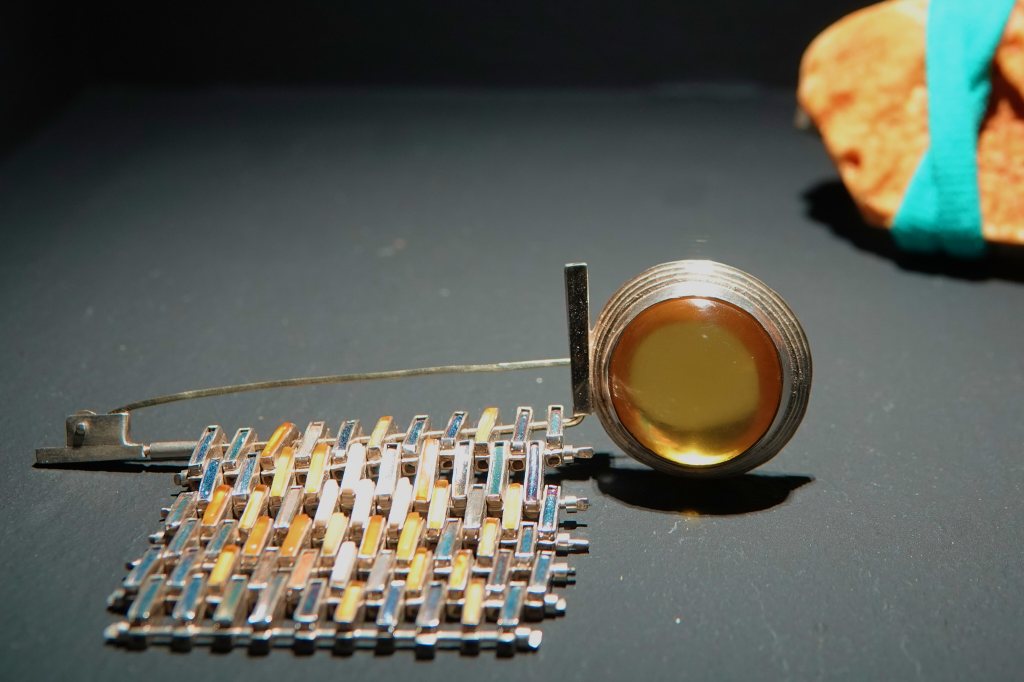
Headline photo of the article: Vita Pukštaitė-Bružė Brooch – ‘Reflection’, 2017 Amber, silver, gold, copper, enamel, mammoth bone 80 x 120 cm Lithuanian Museum of Art
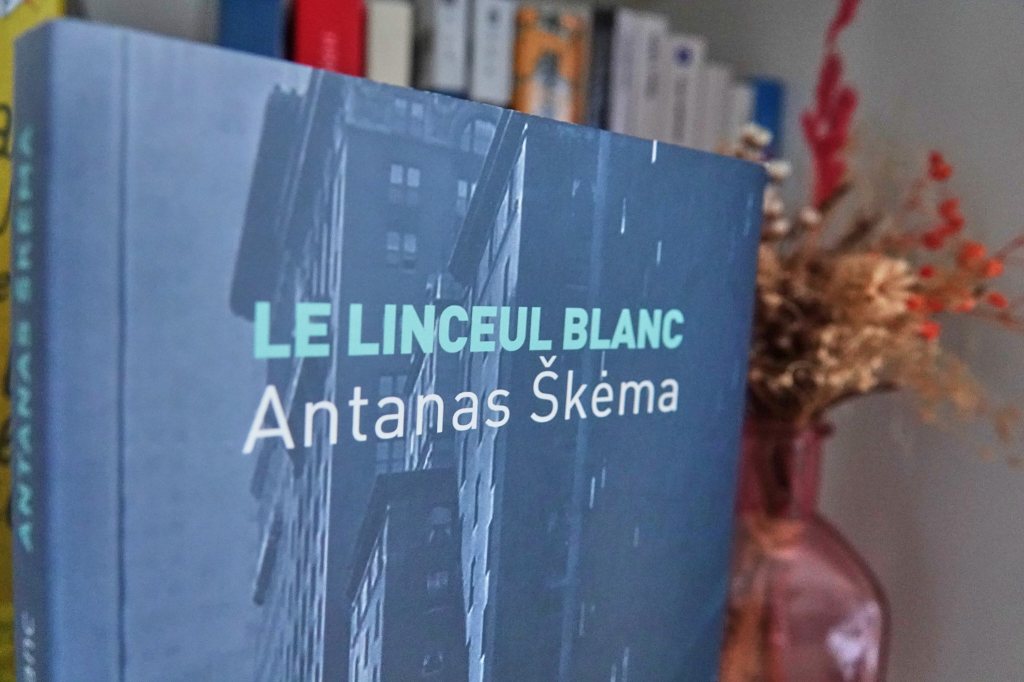
White Shroud (original title: Balta drobulė : romanas) by Antanas Škėma is a Lithuanian masterpiece that the French have been able to read since 2024.
I felt quite overwhelmed when I realised that a Lithuanian literary masterpiece written between 1952 and 1954 was not published in Lithuania until 1989 because of Soviet censorship, and did not reach French bookshops until 2024. Antanas Škėma’s novel White Shroud is nothing short of a multi-faceted diamond.
A real historical context that echoes our times
What did I like? First, the metaphorical descriptions of nature. When I contemplate a landscape, I remember passages from the novel and take a fresh look at the sky, the water, the forest and the mist.
What did I like? The author’s ability to add contextual and historical information to the narrative, skilfully denouncing Russian oppression.
Walking through a maze-like garden of memories and emotions
What else did I like? The intertwining timelines: the poetic power in one, the universal quest for self in another, the impulse to live and the highly contemporary issues emerging from all of them. This maze-like memory garden visually may match a nervous system, which plays a key role in the novel. It also gives us a rare opportunity to dive into the mental process of writing poetry.
There are also delightful touches of humor, which made me laugh. Now I know why I love poetry and humor so much. Both concepts share one thing in common: they offer a non-conformist vision of reality. I also shed many tears, filled with gratitude. I have rarely read words so apt to convey the thoughts and emotions that overwhelm us in moments of despair.
Exploring the richness of Lithuanian mythology
White Shroud is a wonderful expression of Lithuania’s cultural heritage: it refers to many literary characters from other Lithuanian works.
The novel also highlights many gods and creatures from Lithuanian mythology. The footnotes written by translator Miglė Dulskytė, whose work is truly outstanding, provide invaluable information on each name.
French-speaking readers may discover that Lithuania is one of the few countries with its own mythology. The goddesses have the same hierarchical status as the gods. The veneration of nature is at the heart of Lithuanian mythology. This mythology, just like the Pagan religion, contributed to making Lithuanians the longest-lasting resisters to evangelisation in Europe.
The French translation has kept all the Lithuanian names in their original version and maintained the Lithuanian graphic accents. I welcome this choice, which is rare enough to merit a mention.
Experiencing the power of culture
The author’s use of cultural references in his narrative does more than show the power of culture; it immerses yourself in the power of culture.
One of the characters, Vaidilionis, a famous Lithuanian poet in the novel, reminds us of one of the powers of culture in wartime: “I am read and recited. They say I encourage them to stay alive. The entire nation.”
After this literary journey off the beaten track, you’ll no doubt want to extend it with other pages of Lithuanian literature.
White Shroud (original title: Balta drobulė : romanas) by Antanas Škėma, translated by Karla Gruodis, Vagabond Voices, 212 pages.