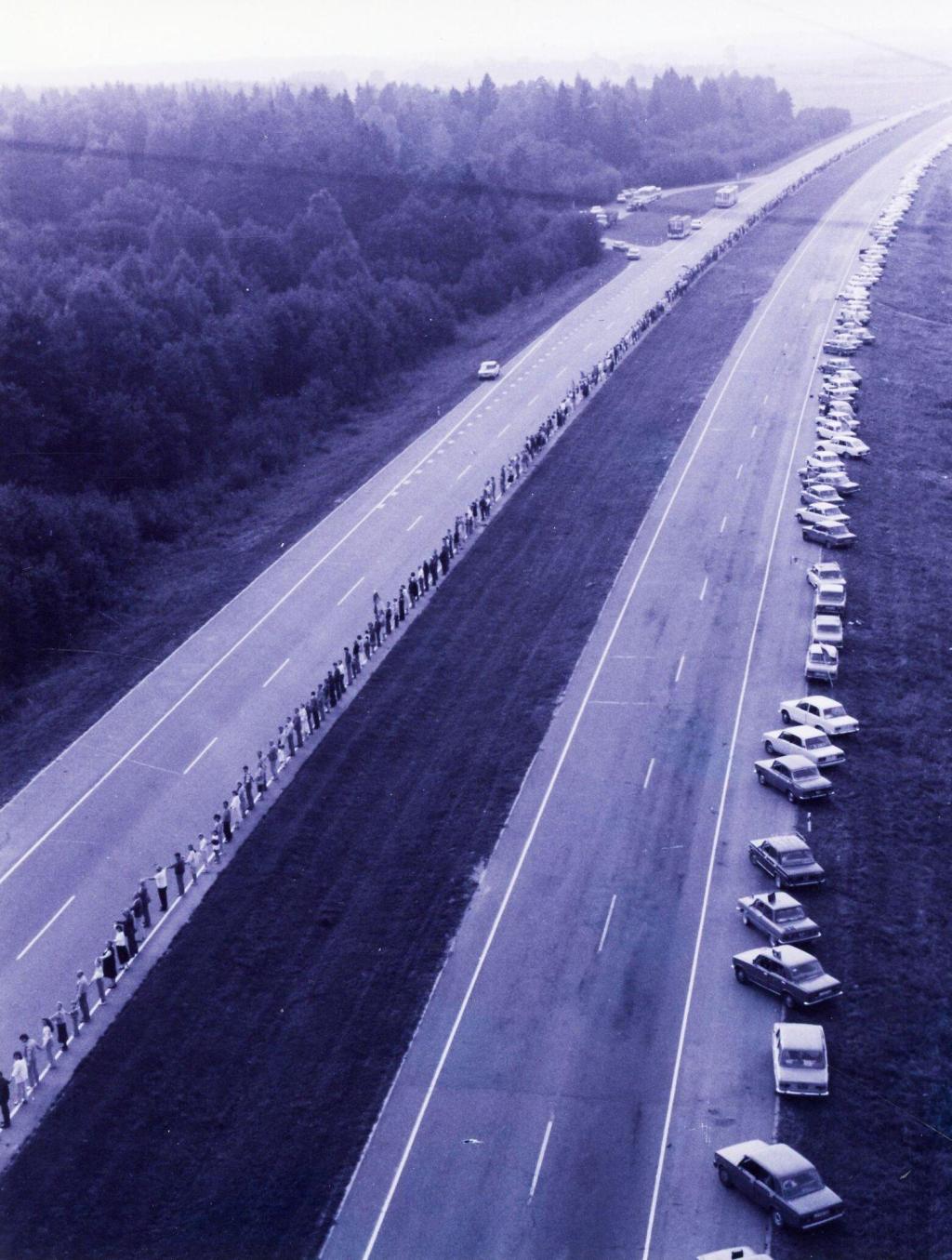
23 August 1989: The Human Chain for Freedom
23 August 1989 marked the 50th anniversary of the signing of the German-Soviet Molotov-Ribbentrop Pact, which was intended as a treaty of non-aggression. This pact was actually accompanied by ‘secret protocols’, ‘which paved the way for the Baltic states to be annexed by the USSR, by placing them in the Soviet “zone of interest”’ and ‘allowed Stalin to invade Latvia, Lithuania and Estonia in September 1939, just a few weeks after Hitler’s troops had entered Poland’, as stated in two articles in Le Monde on 25 August 1989.
On 23 August 1989, 2 million Lithuanians, Latvians and Estonians had the courage to form a giant human chain of peaceful protest stretching 600 km from Vilnius to Tallinn. This human chain was called the Baltic Way.
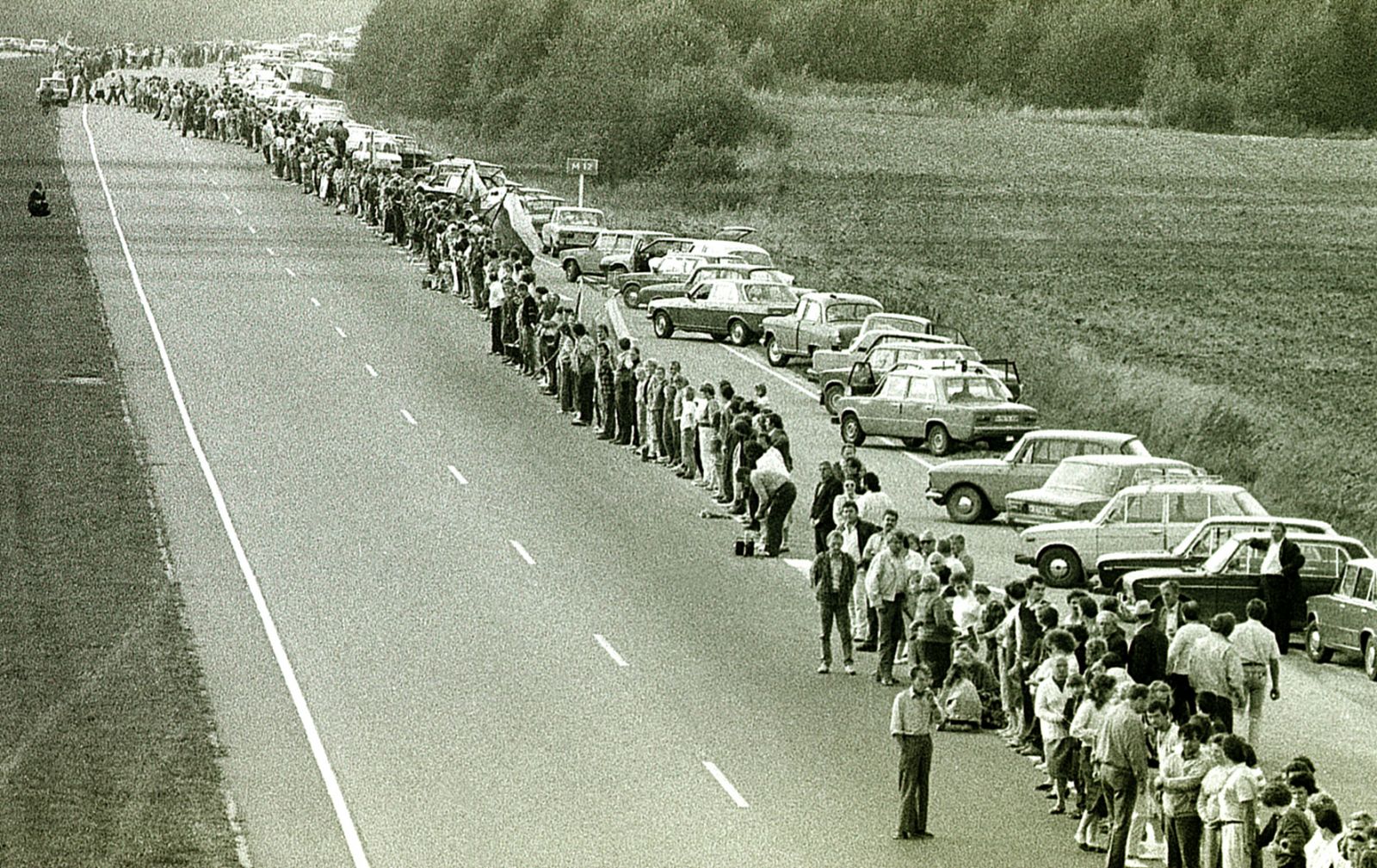
The Baltic Way on 23 August 1989
Source: ELTA (Lithuanian and international news agency)
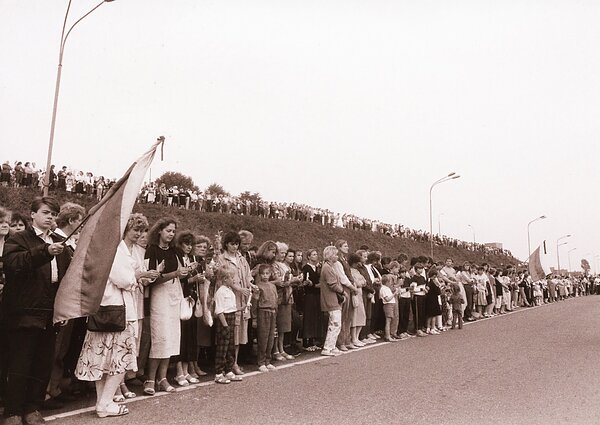
Photo credit: Vytautas the Great War Museum (Lithuania)
On 25 August 1989, the newspaper Le Monde reported:
‘A moment of silence was observed in Tallinn, as the bells fell silent, while the tricolored blue, black and white flags – the colors of Estonia, which became official again this year – flapped in the wind. Then the crowd began to sing the national anthem, chanting “Freedom, freedom, freedom!”. Many banners were held up denouncing the 1939 pact, but also attacking the “Soviet occupation”. The banners read: ‘Russians, go home!’ and “Estonia will never belong to the Soviet Union!”.’
[…]
‘In the very Catholic city of Riga, bells rang throughout the day, every quarter of an hour. The red, white and red colors were everywhere.’
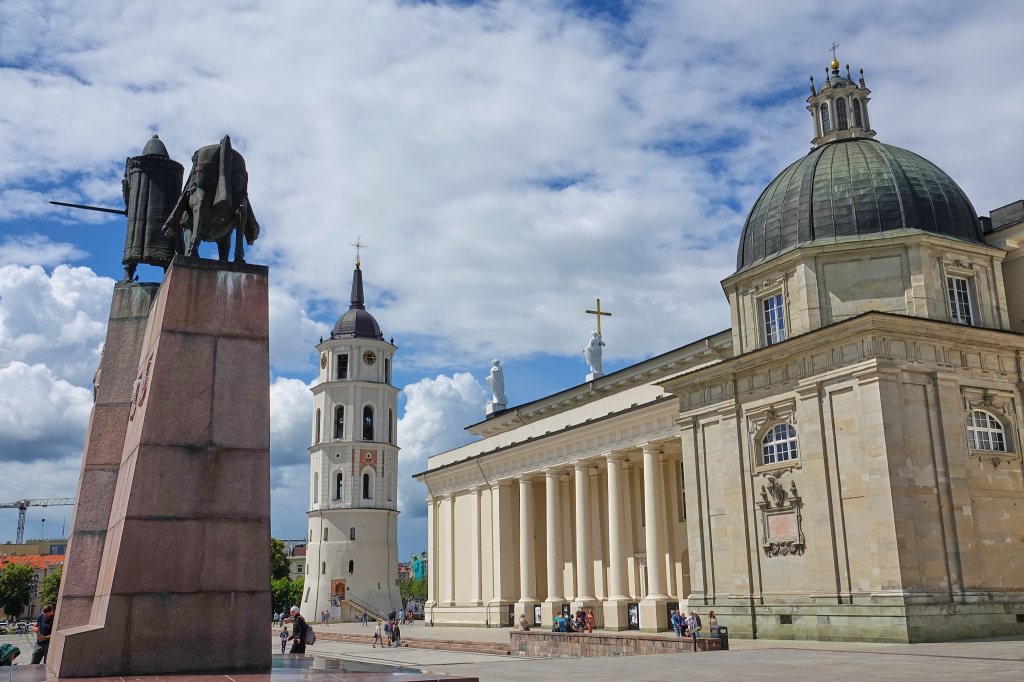
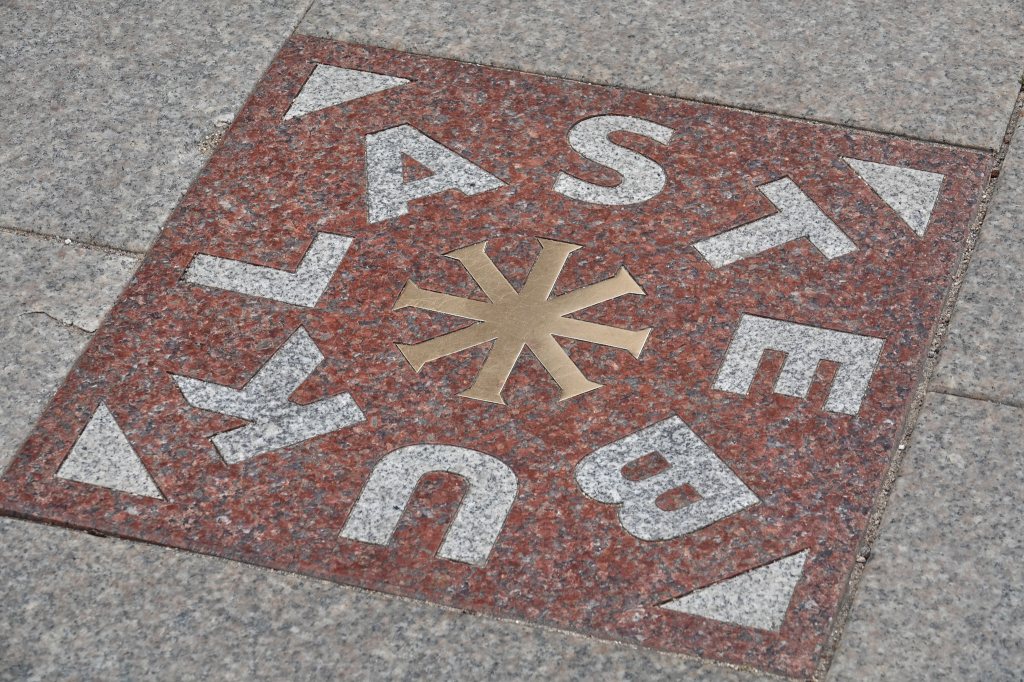
In Vilnius, Cathedral Square (Katedros Aikštė in Lithuanian) is considered to be the centre of Lithuania. The human chain began at the very spot where the word STEBUKLAS (miracle in Lithuanian) can be seen on the ground.
Photo credit: the blog’s author
Silence and resilience of the Balts during the Soviet occupation
From 1939 until 1991, Lithuania, Latvia and Estonia were occupied and annexed by imperialist Russia. Throughout this period, the Balts suffered tremendously by being deprived of everything: they sometimes had to queue for hours to get basic foodstuffs, they were forbidden to go to church or an ulcer was treated with aspirin (as documented by Jean Bigot in his book La Lituanie au quotidien : Portraits d’une renaissance) – to name but a few examples.
The only thing they were entitled to was probably silence. Muzzled by the Russian authorities, the Balts have retained a rather silent temperament.
In 2019, on the occasion of the 30th anniversary of the Baltic Way, Enrico Letta, then Dean of Sciences Po Paris and former Italian Prime Minister, stressed that the Baltic Way was ‘a unique example of civic activism that has surprised the whole world with its scale and authentic mobilisation of civil society’.
After the return to freedom, the psychological aftereffects of the Soviet era
A few months after the human chain, on 11 March 1990, Lithuania succeeded in re-establishing its independence, followed by Estonia on 20 August 1991 and Latvia on 21 August 1991.
During the Soviet era, the Balts were always afraid of losing their identity and their native languages. Despite regaining their independence and freedom, the moral damage of the Soviet occupation has never disappeared: fear is still deeply rooted in the minds of the Balts, as Zita, a Lithuanian guide in her seventies, told me.
Of the 5 universal primary emotions, fear is the most difficult to control, which may make it the hardest legacy to bear for these peoples.
Ukraine on the threshold of Europe
By learning the Lithuanian language, I also discovered the history of an extremely endearing people, that have shown unimaginable courage even in their very contemporary history.
I wasn’t yet born when the human chain was formed, but when I discovered, in an article in Le Monde published on 25 August 1989, an extract from the joint public declaration made by the Baltic States to the rest of the world on 23 August 1989 – “Today, fifty years later, we call on all our friends in the North, South, East and West: the Baltic states stand on Europe’s threshold” -, I know that Ukraine is also on the threshold of Europe today, and that truth, democracy and freedom will always have the last word.
Source of the headline photo: Vytautas the Great War Museum (Lithuania)
 HELLO LITHUANIAN CULTURE
Leave a comment