How is Lithuanian one of the oldest living languages in the world
Lithuania is a country of lakes nestled between hills and plains, a geography that has helped preserve the ancient roots of its national language. For linguists, Lithuanian is of exceptional interest because it is considered to be the living language closest to Proto-Indo-European, a hypothetical language believed to be the only ancestor of today’s Indo-European languages.
The Lithuanian language, like the people who speak it, is neither Slavic nor Germanic: along with Latvian (and Old Prussian, now a dead language), it belongs to a specific branch of the Indo-European family: the Baltic. Lithuanian is thought to have preserved the greatest number of grammatical structures and words from Proto-Indo-European. Rivers, lakes and forests isolated the ancestors of Lithuanians, the proto-Baltic tribes who lived in 3000 BC: this isolation helped preserve the archaic character of the Lithuanian language.
While French and English grammar has simplified considerably over time, the grammar of Germanic languages has simplified less, and Lithuanian grammar even less. Lithuanian has retained some very ancient features. It has a rich system of declensions, including a rare, if not unique, grammatical form: the pronominal form of the adjective. Putting an adjective in the pronominal form allows it to be given greater prominence in the sentence, to emphasise the quality it expresses or the characteristic of the noun it complements.
This may give the impression that Lithuanian is nothing like French. And yet, Lithuanian cannot be said to be completely different from French.
Lithuanian and French words: linguistic surprises to discover
Below, I invite you to discover Lithuanian words* from a wide variety of fields that have unexpected similarities with their French equivalents.
If you compare these same words with their English, Spanish, Italian or German equivalents, you will find that for almost all of them, only the Lithuanian word looks like the French word! For example, the French word affiche is afiša in Lithuanian, but poster in English and in German, cartel in Spanish and locandina in Italian! Amazing, isn’t it?
The word afiša is borrowed from French, as are the Lithuanian equivalents of a few other French words on this list: chef-d’œuvre, contour, chalet, papier mâché, etc.
*Pronunciation guide:
The Lithuanian letter š is pronounced like in the English word ship;
ž is pronounced like in the English word leisure;
j is pronounced like in the English word yellow.
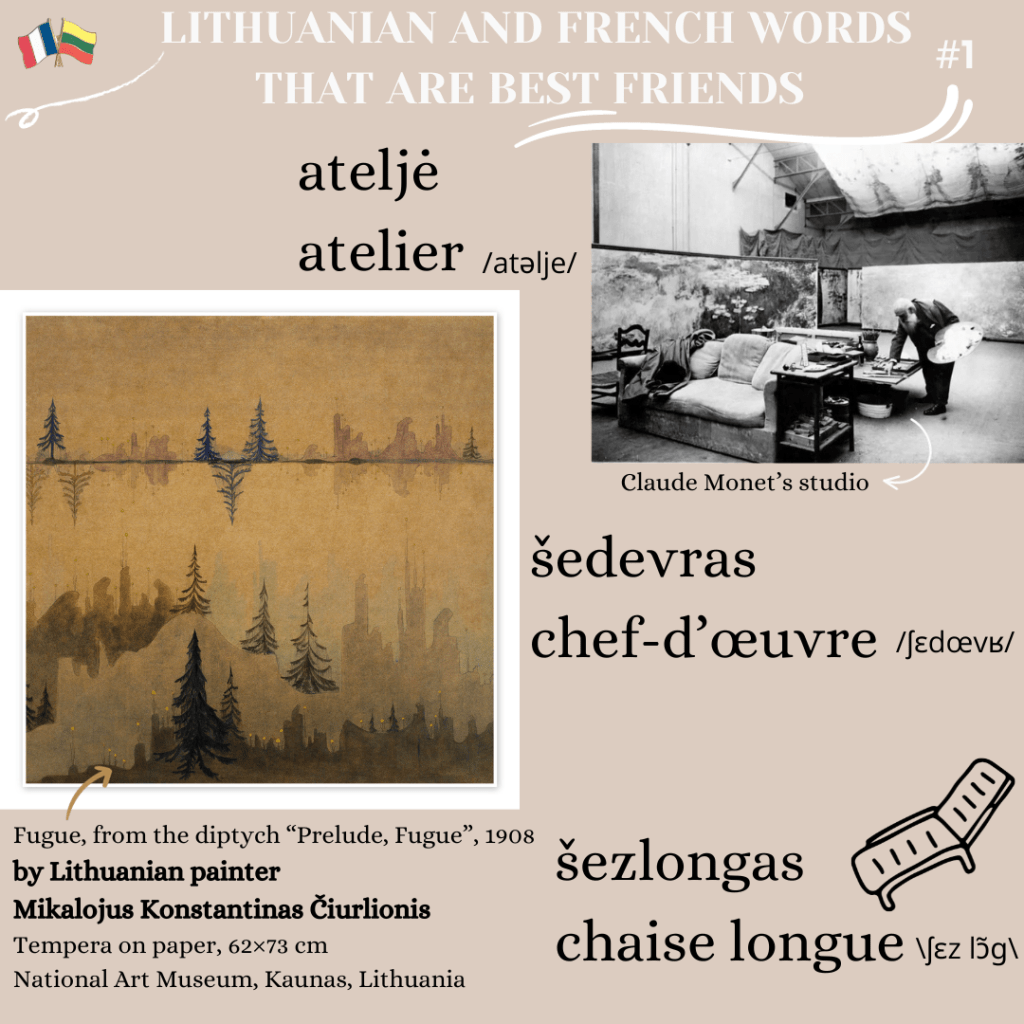
Studio / Masterpiece / Chaise longue
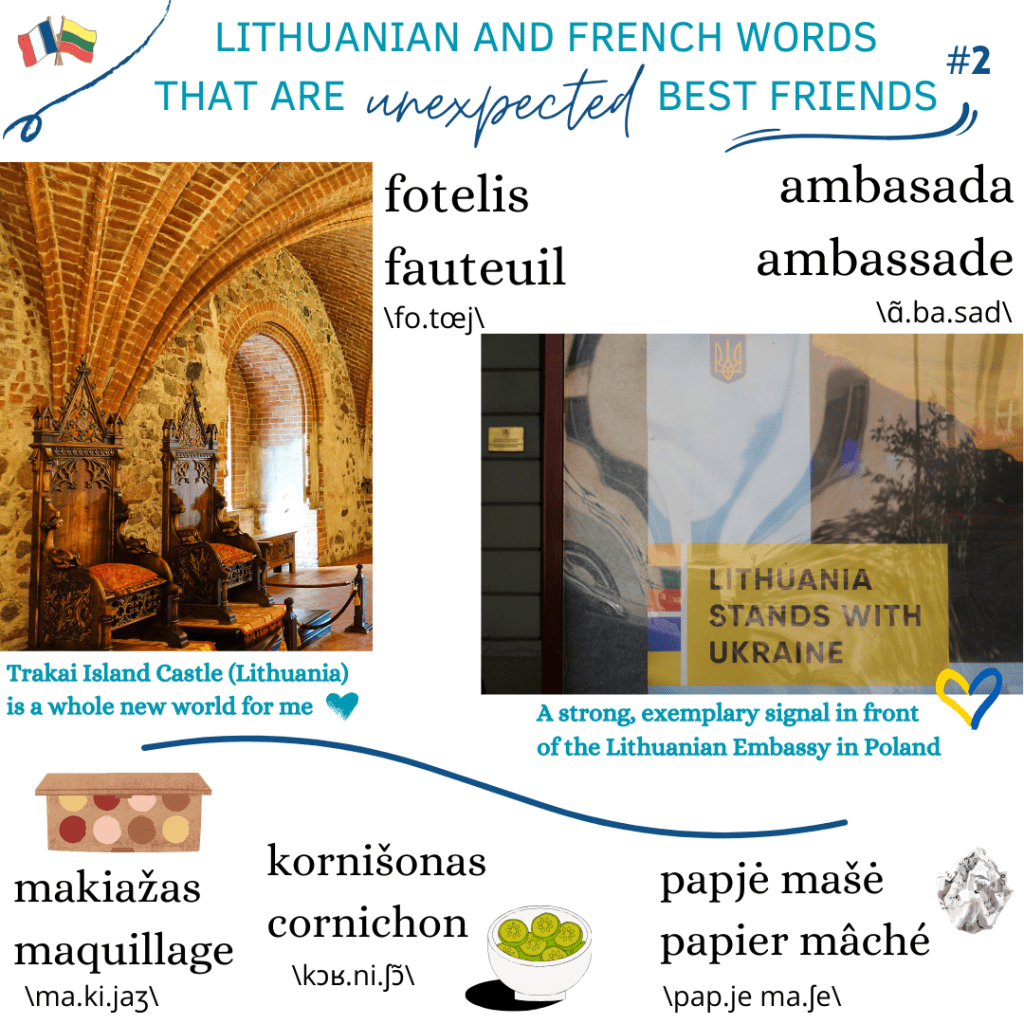
Armchair / Embassy / Make-up / Pickle / Papier mache
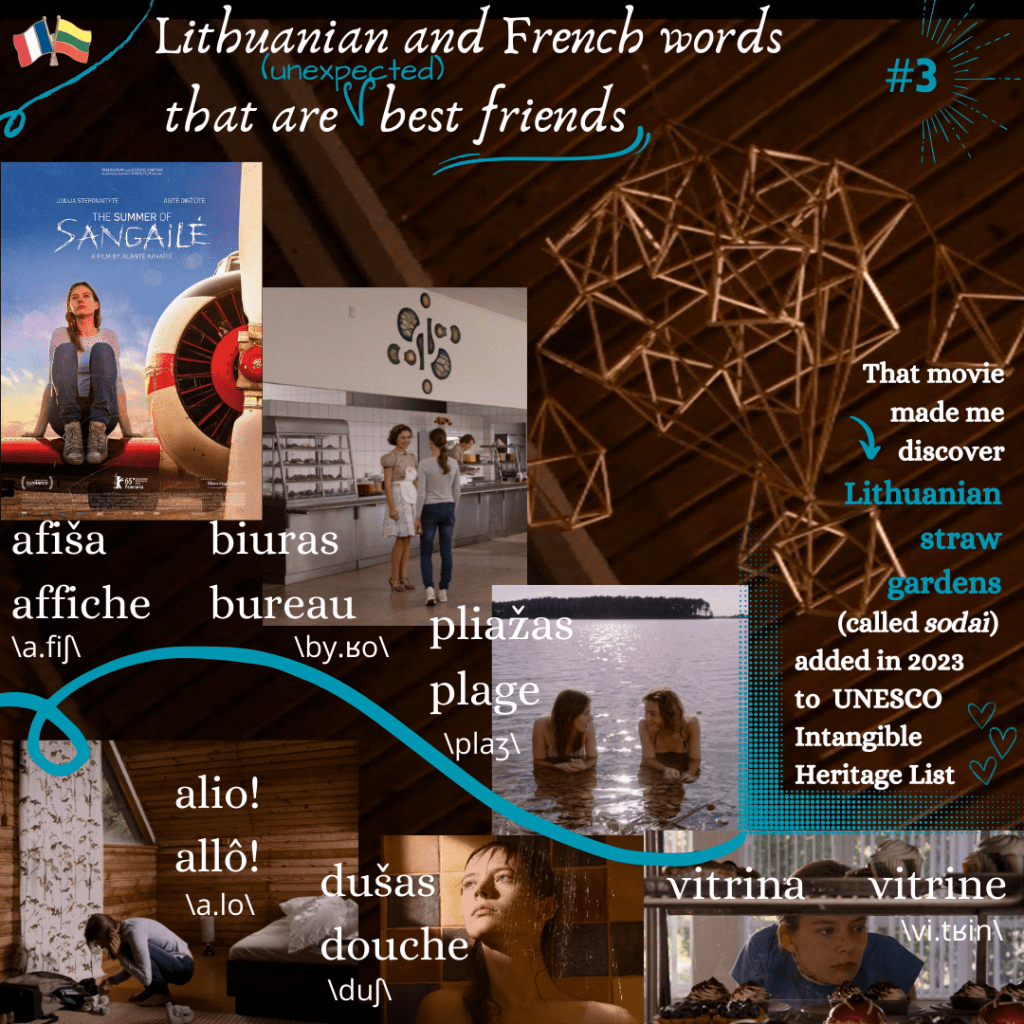
Poster / Office / Beach / Hello! [on the phone] / Shower / Window display
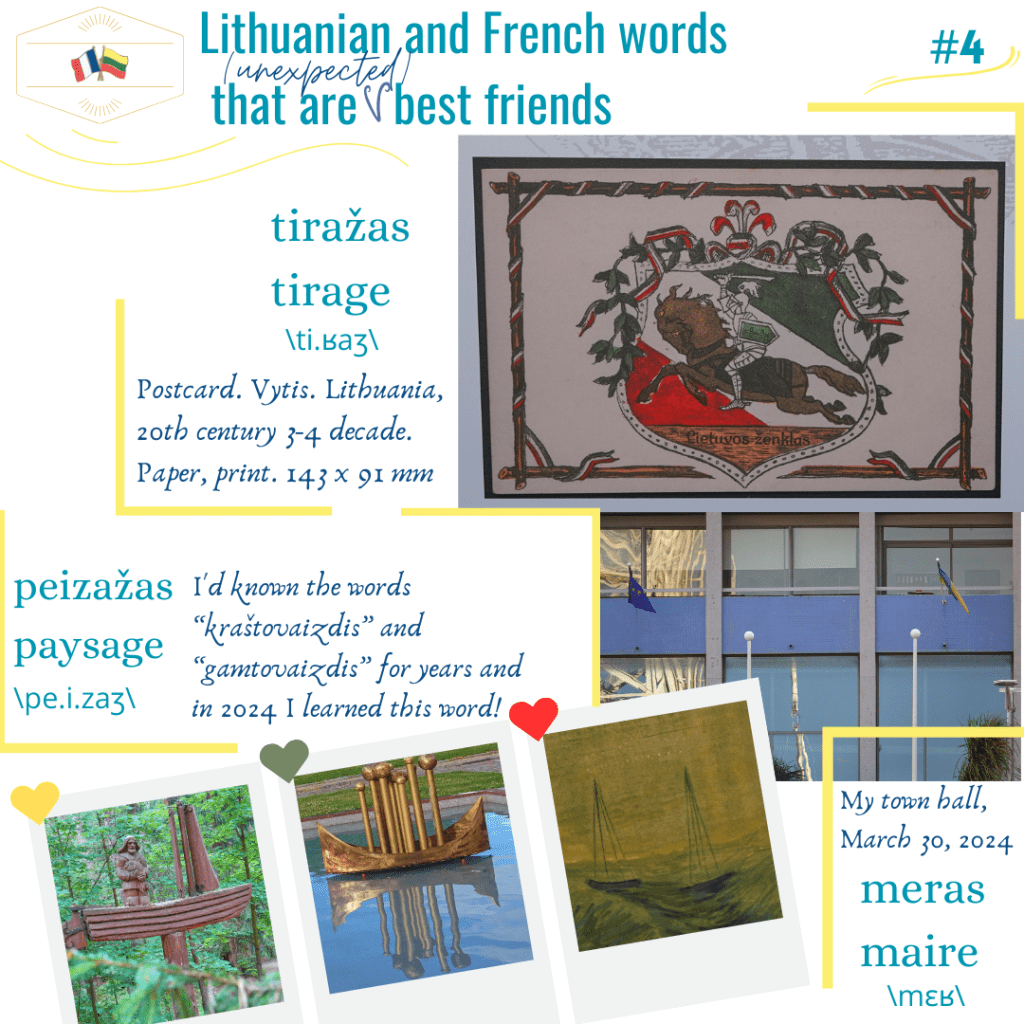
Print / Landscape / Mayor
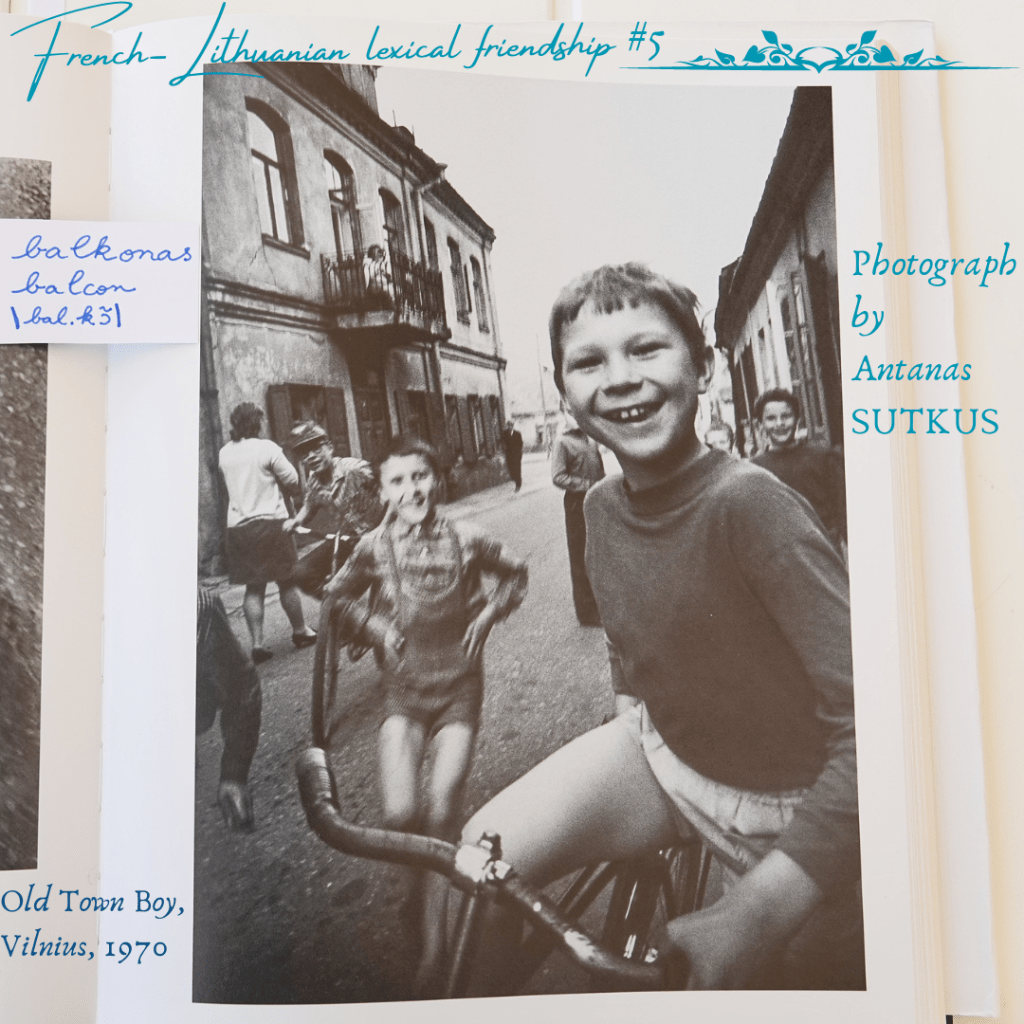
Balcony
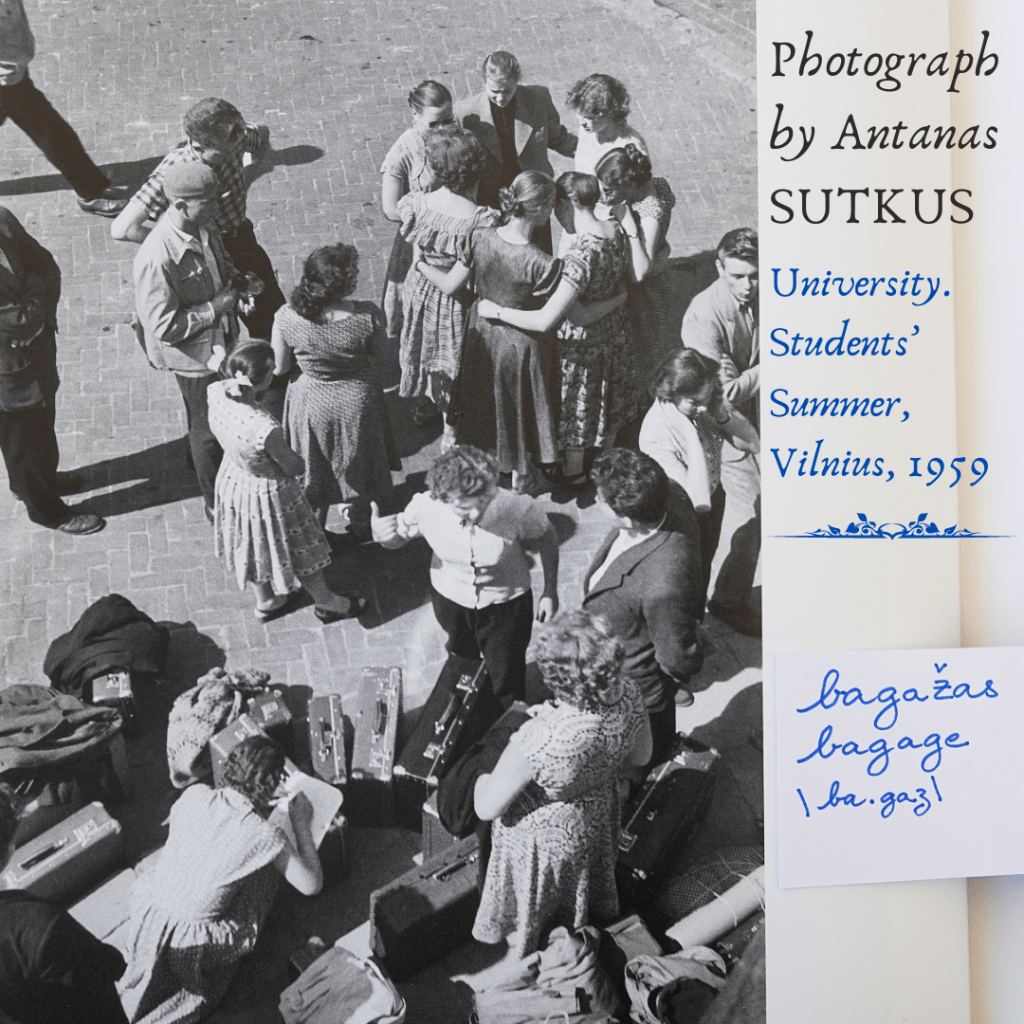
Luggage
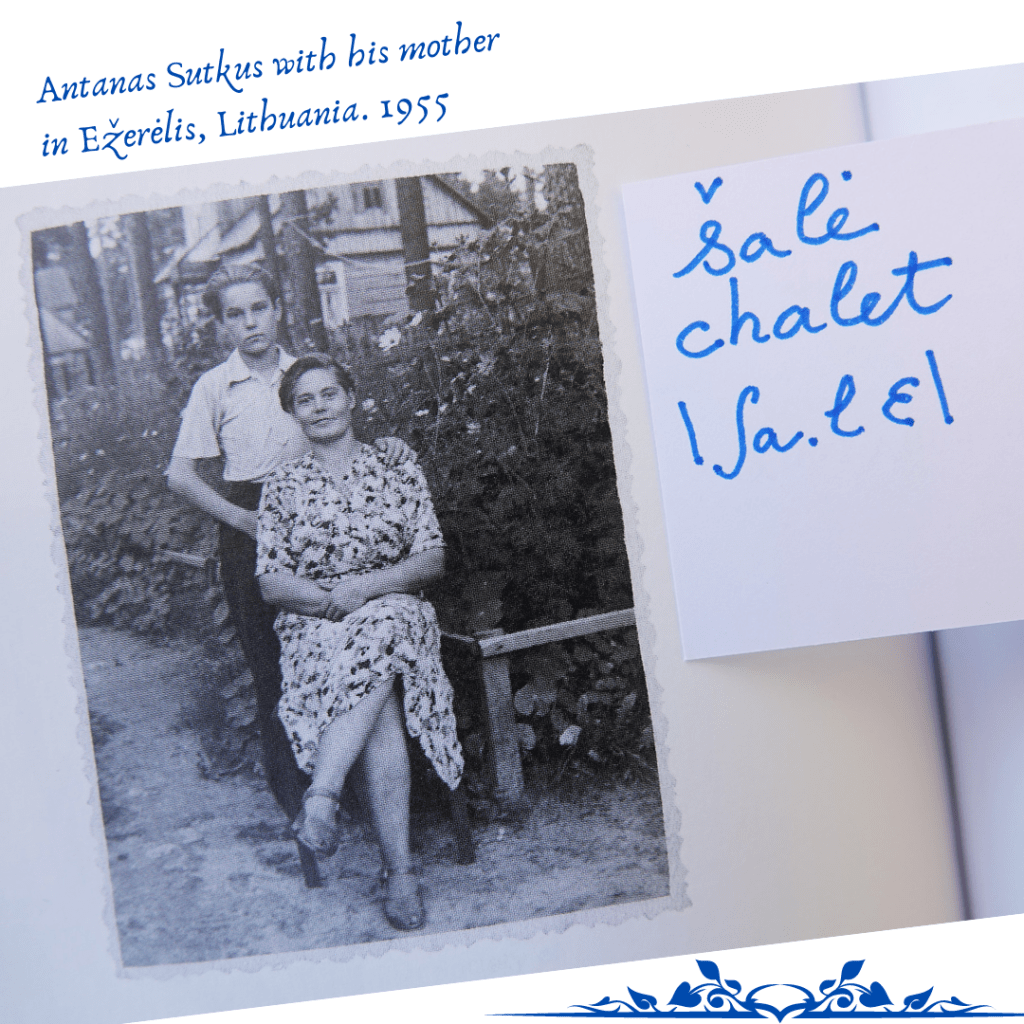
Cottage
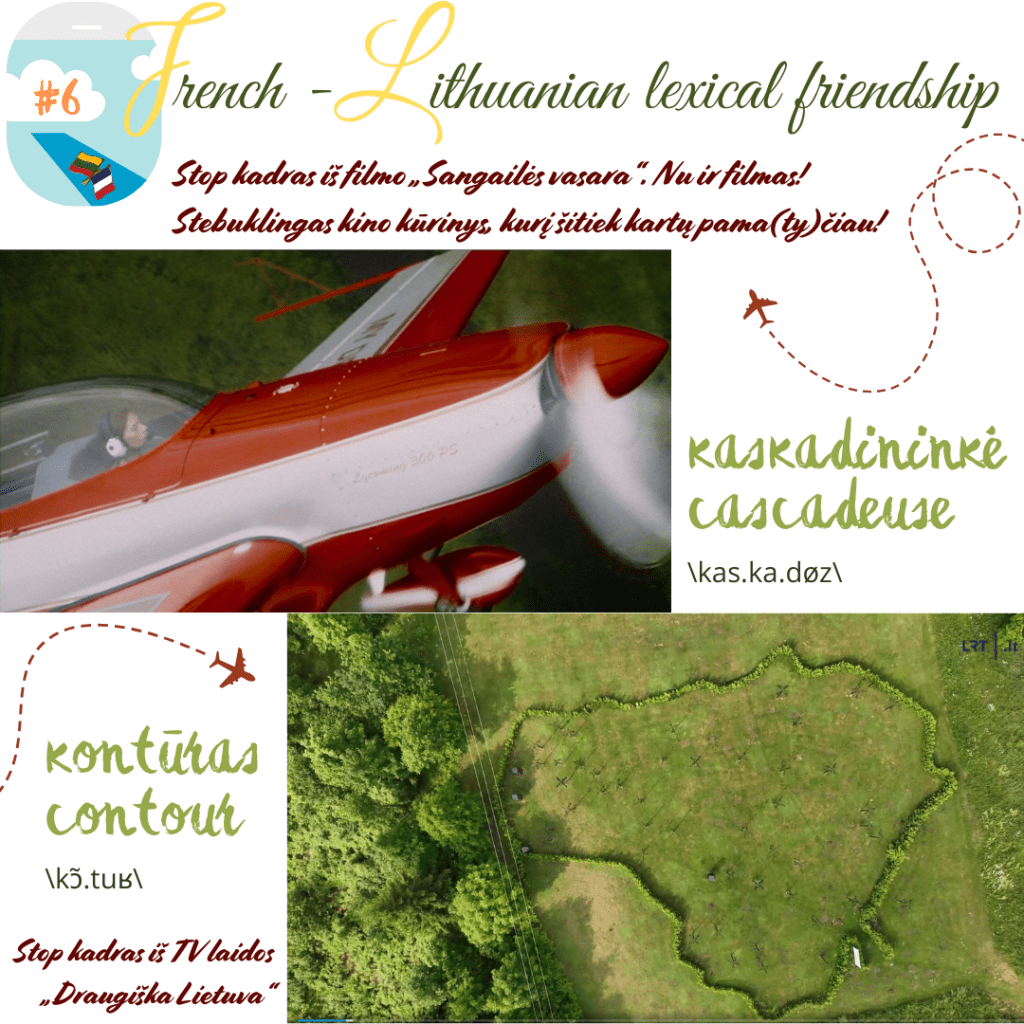
Stuntwoman / Outline
As the list of words provided is based on my personal reading, I will be delighted to add to it as I find out surprising similarities between Lithuanian and French.
All the graphics above were created by the blog’s author.
 HELLO LITHUANIAN CULTURE
Leave a comment