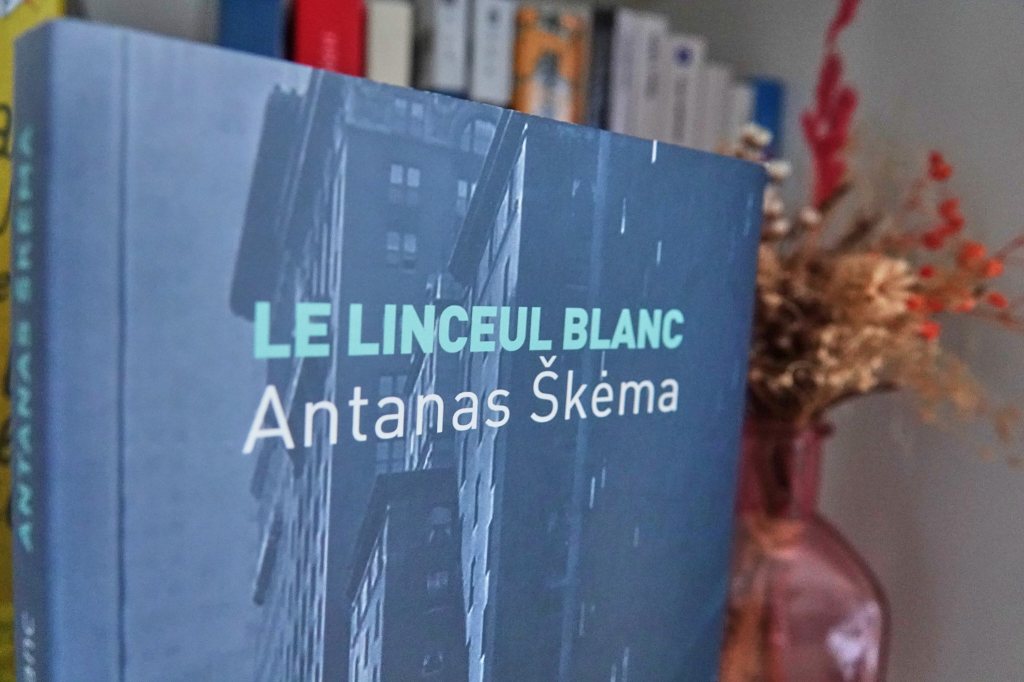
A 1954 masterpiece finally available in French
White Shroud (original title: Balta drobulė : romanas) by Antanas Škėma is a Lithuanian masterpiece that the French have been able to read since 2024.
I felt quite overwhelmed when I realised that a Lithuanian literary masterpiece written between 1952 and 1954 was not published in Lithuania until 1989 because of Soviet censorship, and did not reach French bookshops until 2024. Antanas Škėma’s novel White Shroud is nothing short of a multi-faceted diamond.
A real historical context that echoes our times
What did I like? First, the metaphorical descriptions of nature. When I contemplate a landscape, I remember passages from the novel and take a fresh look at the sky, the water, the forest and the mist.
What did I like? The author’s ability to add contextual and historical information to the narrative, skilfully denouncing Russian oppression.
Walking through a maze-like garden of memories and emotions
What else did I like? The intertwining timelines: the poetic power in one, the universal quest for self in another, the impulse to live and the highly contemporary issues emerging from all of them. This maze-like memory garden visually may match a nervous system, which plays a key role in the novel. It also gives us a rare opportunity to dive into the mental process of writing poetry.
There are also delightful touches of humor, which made me laugh. Now I know why I love poetry and humor so much. Both concepts share one thing in common: they offer a non-conformist vision of reality. I also shed many tears, filled with gratitude. I have rarely read words so apt to convey the thoughts and emotions that overwhelm us in moments of despair.
Exploring the richness of Lithuanian mythology
White Shroud is a wonderful expression of Lithuania’s cultural heritage: it refers to many literary characters from other Lithuanian works.
The novel also highlights many gods and creatures from Lithuanian mythology. The footnotes written by translator Miglė Dulskytė, whose work is truly outstanding, provide invaluable information on each name.
French-speaking readers may discover that Lithuania is one of the few countries with its own mythology. The goddesses have the same hierarchical status as the gods. The veneration of nature is at the heart of Lithuanian mythology. This mythology, just like the Pagan religion, contributed to making Lithuanians the longest-lasting resisters to evangelisation in Europe.
The French translation has kept all the Lithuanian names in their original version and maintained the Lithuanian graphic accents. I welcome this choice, which is rare enough to merit a mention.
Experiencing the power of culture
The author’s use of cultural references in his narrative does more than show the power of culture; it immerses yourself in the power of culture.
One of the characters, Vaidilionis, a famous Lithuanian poet in the novel, reminds us of one of the powers of culture in wartime: “I am read and recited. They say I encourage them to stay alive. The entire nation.”
After this literary journey off the beaten track, you’ll no doubt want to extend it with other pages of Lithuanian literature.
White Shroud (original title: Balta drobulė : romanas) by Antanas Škėma, translated by Karla Gruodis, Vagabond Voices, 212 pages.
Photo credit: the author’s blog
 HELLO LITHUANIAN CULTURE